
A respirator becomes part of every conversation and every breath while it is worn. Its usefulness reaches beyond filtration: it must also leave room for movement, communication, and the ordinary interactions that make a working day possible. For someone who already finds breathing difficult, the effort of drawing air through a filter can become a particularly consequential design problem.
In October 2020, Chris Outwater of Liberty Medical invited Robert Salazar to address that problem. People with respiratory difficulties wanted the protection of N95 masks during the pandemic, but struggled with breathing resistance. Salazar took on the development of Inspire, bringing his experience with folded materials and compact structures to a device worn directly against the face.
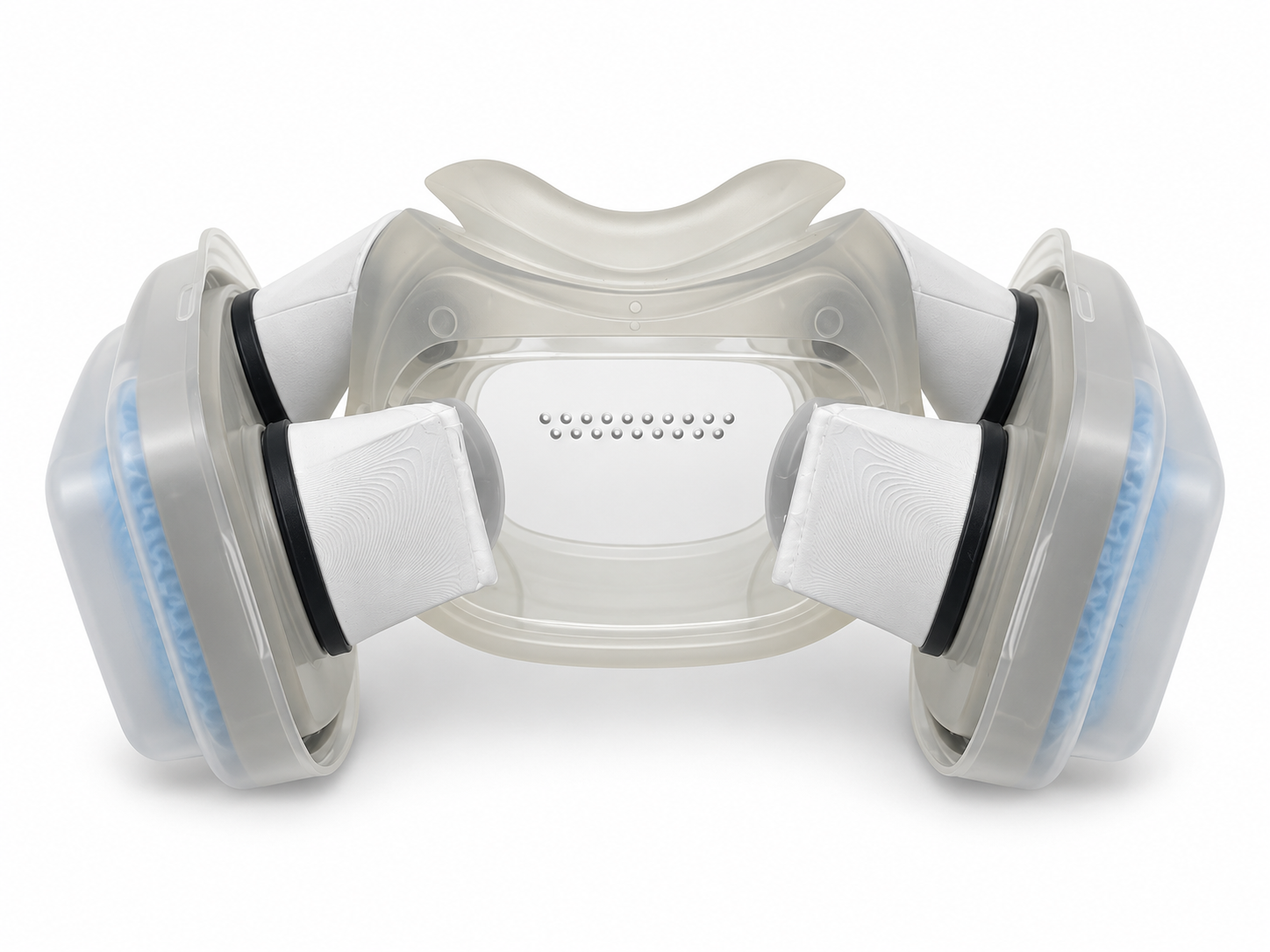
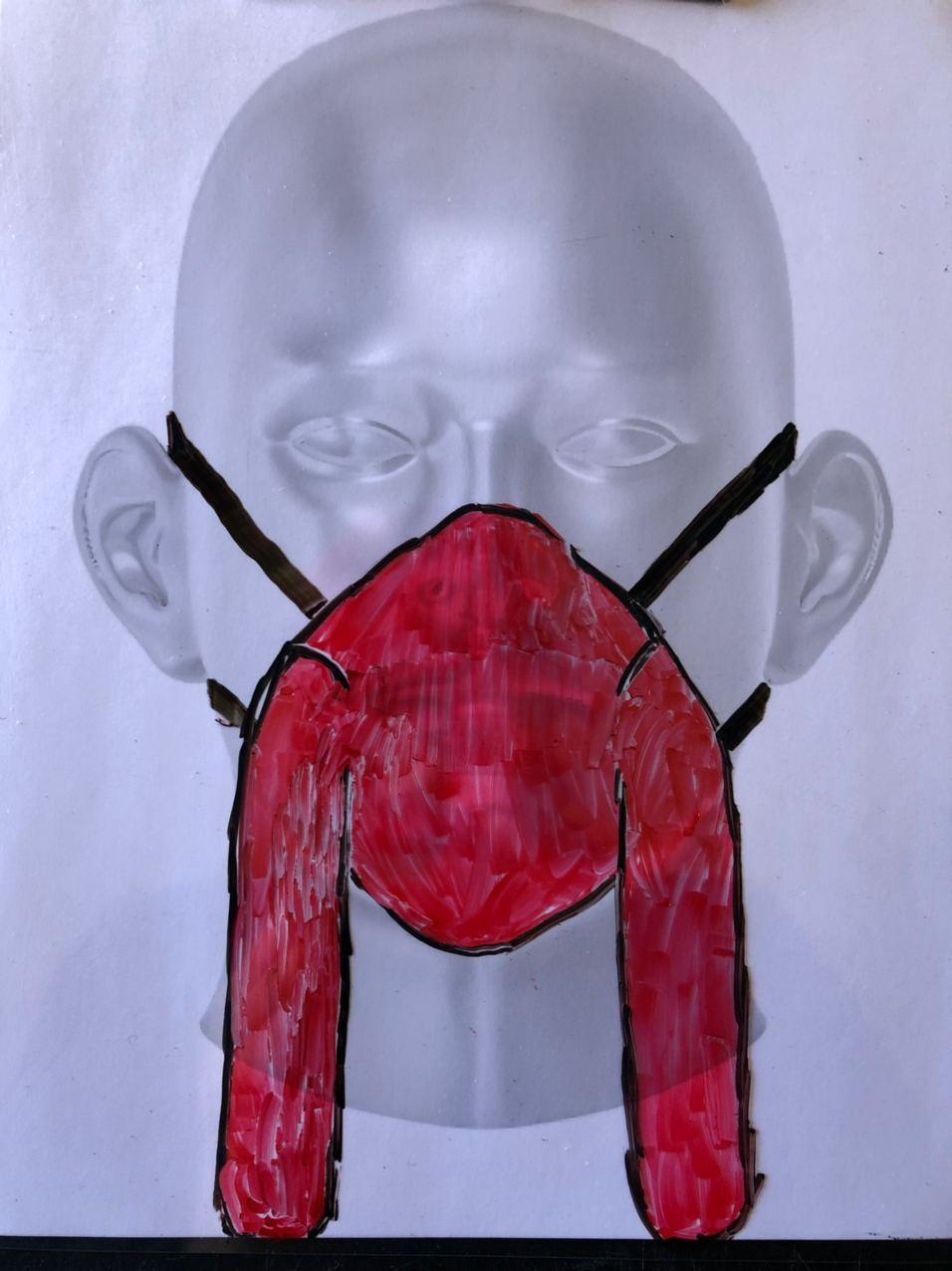
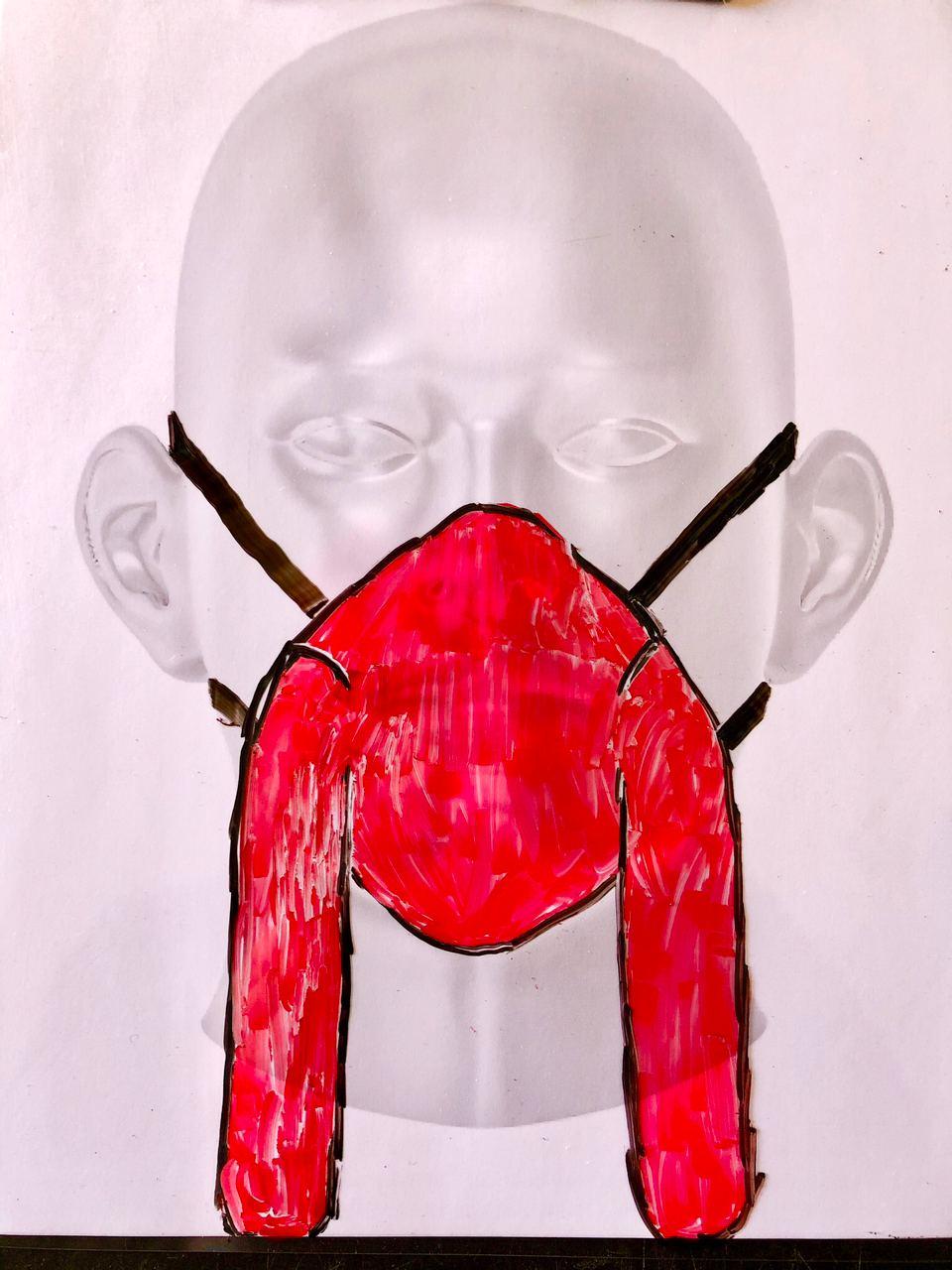
Inspire respirator design, with a transparent central body and compact, side-mounted filter housings.
The challenge involved several features that are easy to treat separately. A filter needs enough area for air to pass through readily. The breathing chamber should retain as little exhaled air as possible. The body must hold its seal without becoming heavy or cumbersome, and it should allow a person’s voice and expression to reach others. Changing one part could improve—or undermine—the rest.
Salazar’s central move was to separate the functions of the breathing space. Inspire used three chambers linked by one-way valves: one for incoming air, a small chamber at the face, and one for outgoing air. This arrangement allowed the filtering surfaces to grow while the volume directly shared by inhalation and exhalation remained small. Both directions of airflow passed through filters.
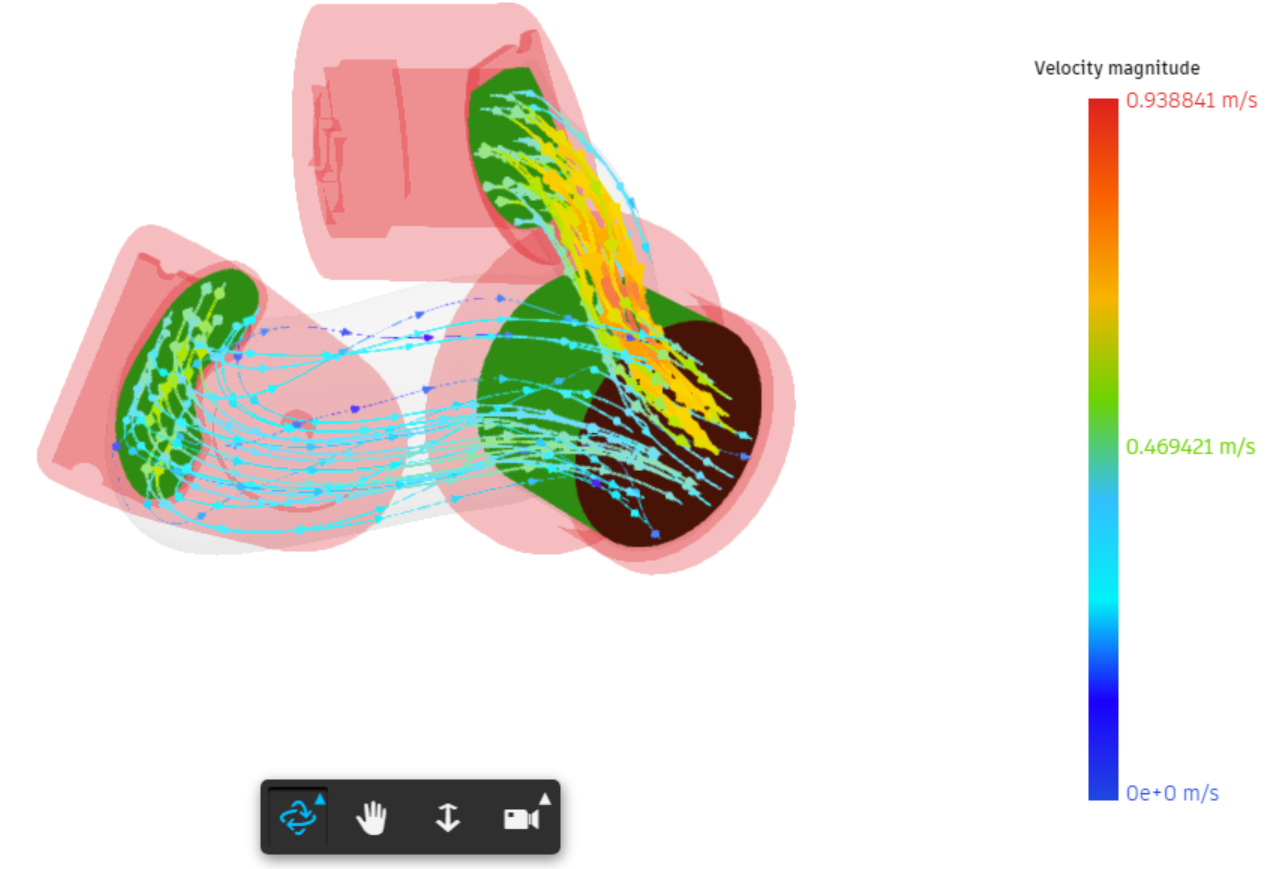
Incoming air passes through its dedicated filter. A one-way valve admits that air to the central chamber and closes against exhalation, keeping moist outgoing breath away from the inhalation filter.
A compact space encloses the mouth and nostrils. Its small volume limits the exhaled air retained near the face, while a thin, clear wall supports speech transmission and leaves the wearer’s lips visible.
A second one-way valve directs outgoing breath into a separate chamber and filter. During inhalation, that valve closes to isolate the exhalation side from the incoming breath.
The inlet valve opens as the wearer draws breath. The outlet valve closes, separating the exhalation chamber from this path. The dedicated inhalation filter supplies the incoming air.
The outlet valve opens as the wearer breathes out. The inlet valve closes, protecting the inhalation chamber from the outgoing breath. Exhaled air leaves through its own filter.
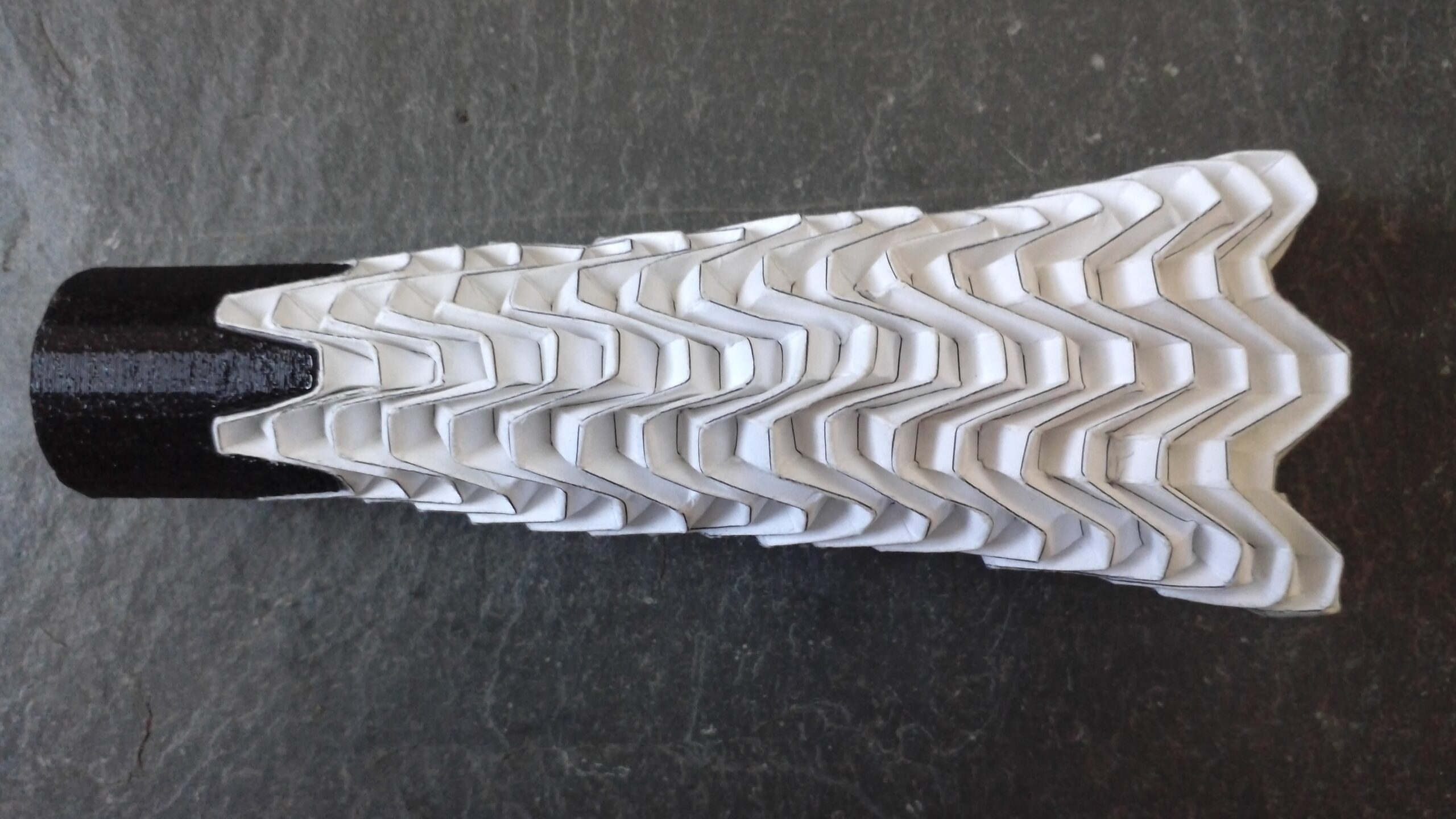
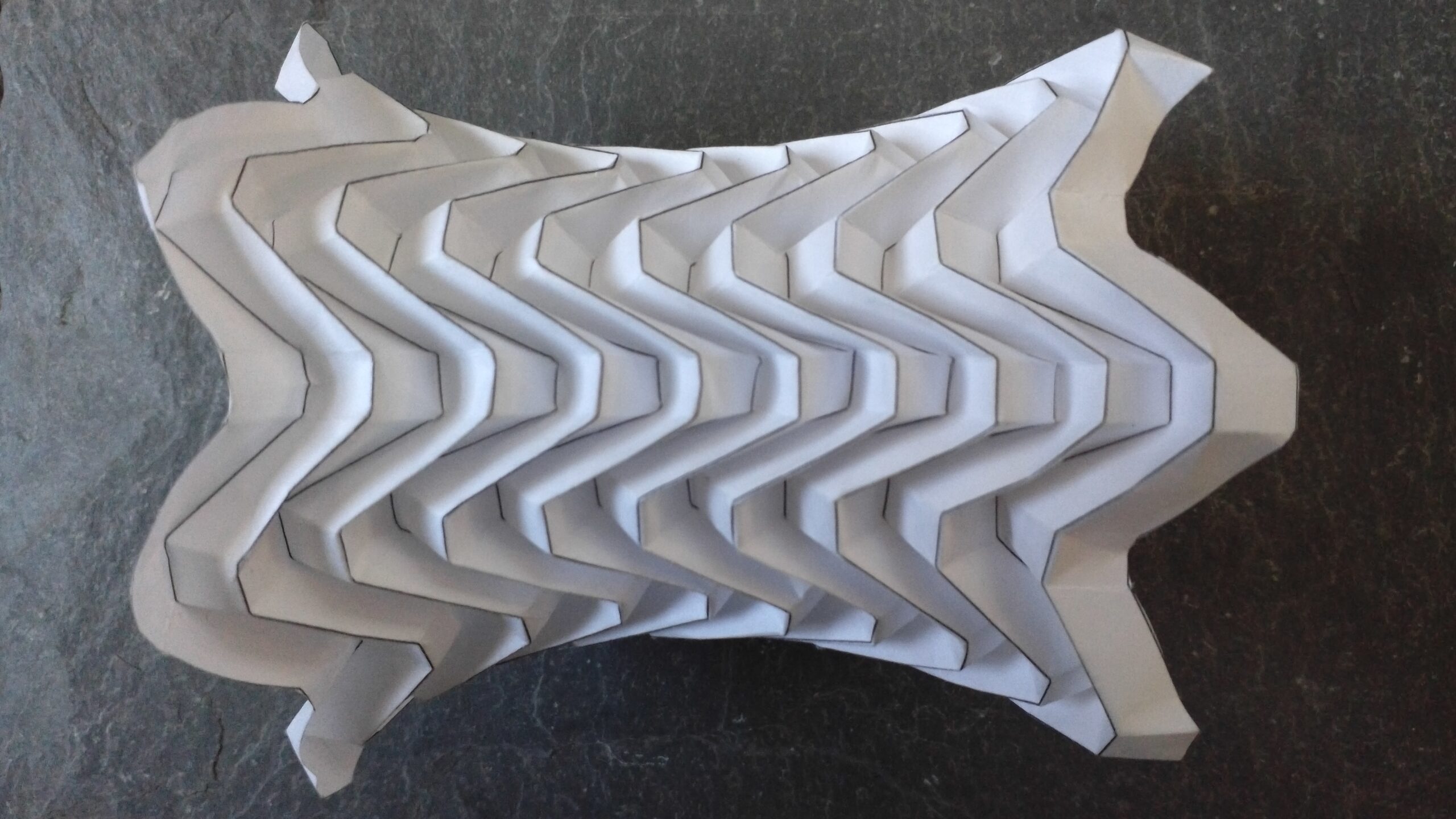
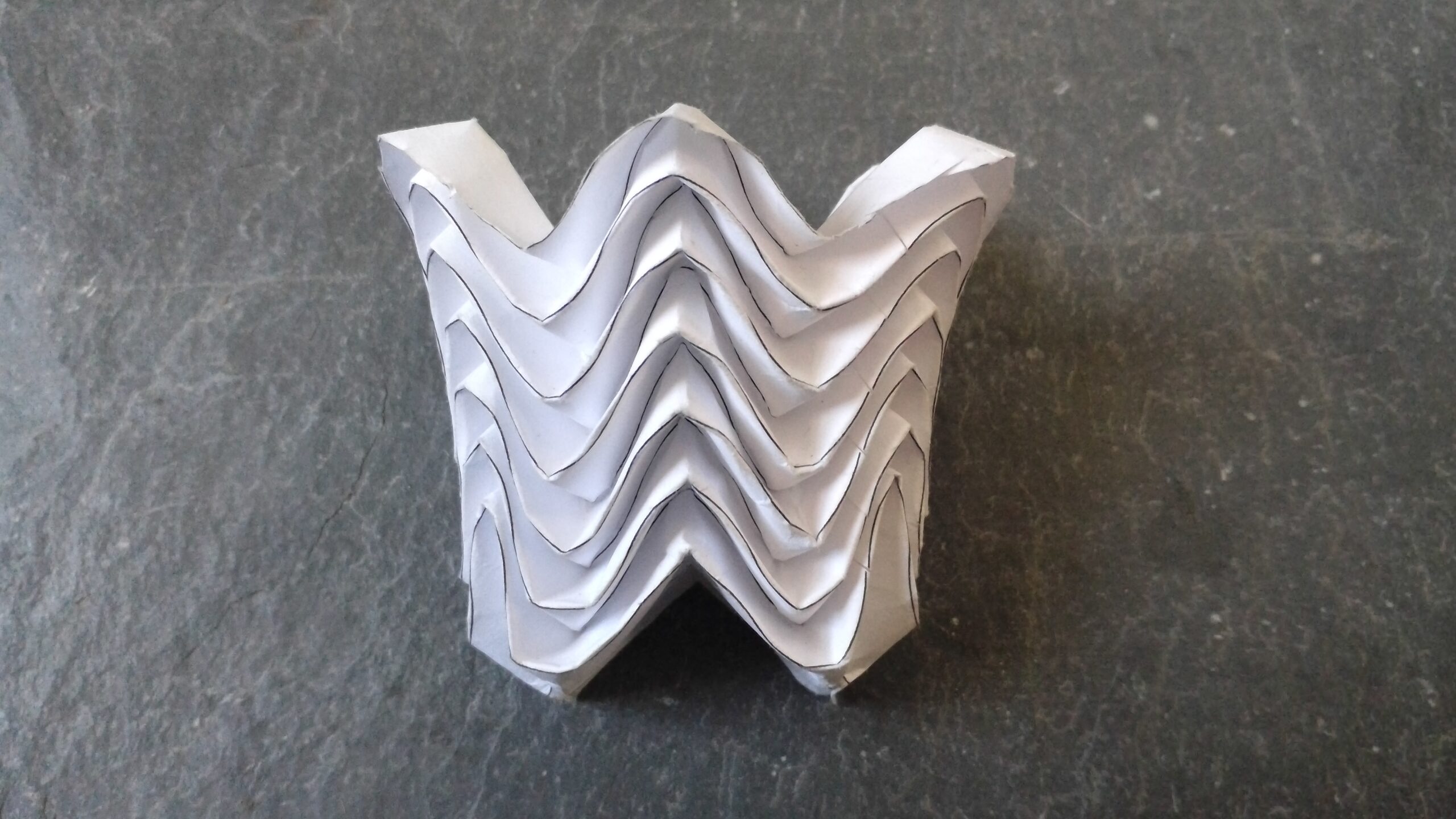
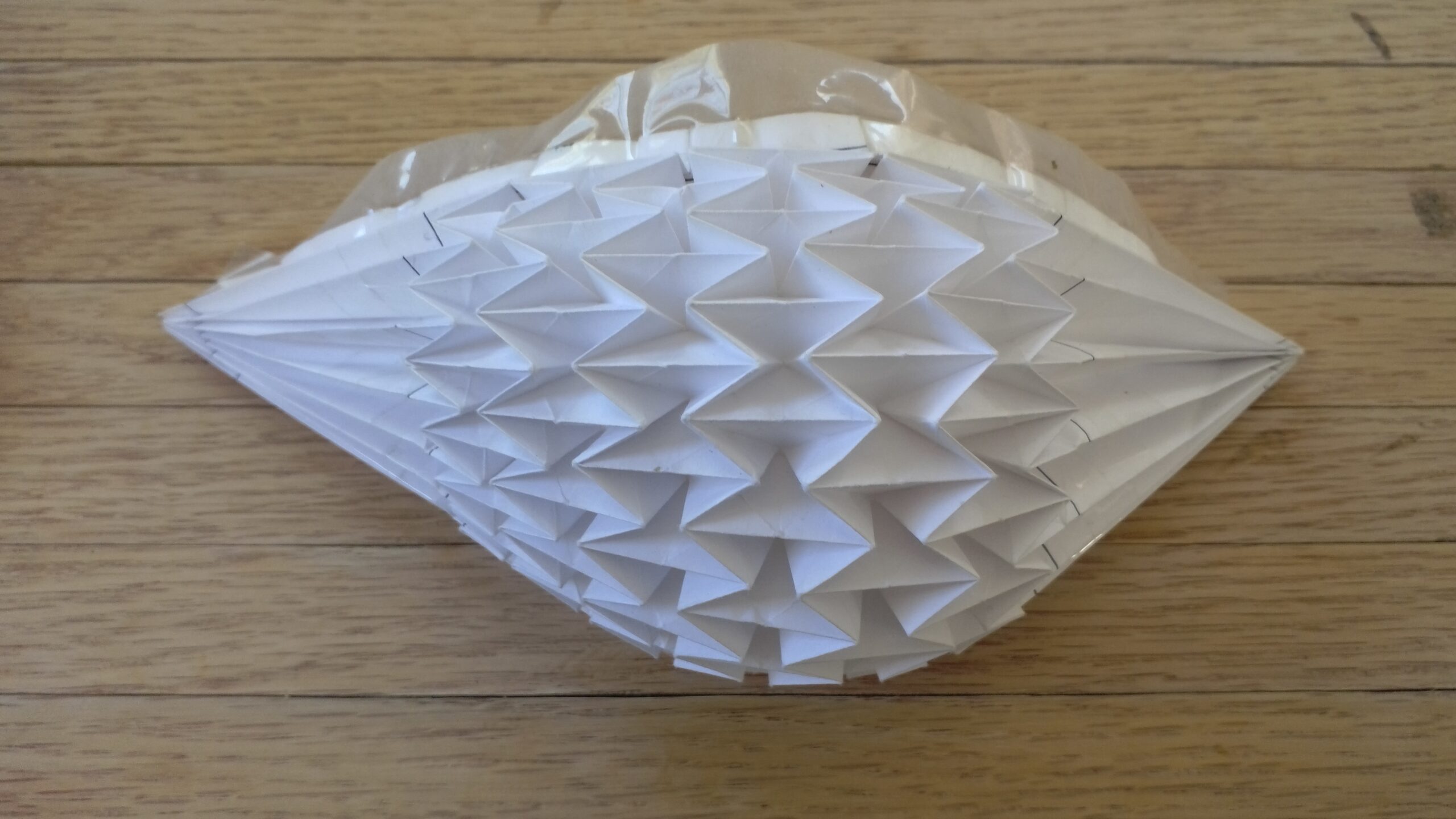
The chamber architecture created a place for another of Salazar’s specialties: giving a thin sheet a useful three-dimensional form. He developed multiple folded-filter candidates, using orikaso folding to fit 2.5 times the filtering surface area into a compact filter format. For a given airflow, distributing it over more usable area lowers the flow per unit area, supporting the goal of lower breathing resistance.
The filter version that received the most prototype testing was designed to fit 3M filter cartridges. This created two avenues for the work: a filter geometry intended for existing respirators, and its integration into Inspire’s dedicated inhalation and exhalation chambers. The fold pattern could serve a familiar interface while the new respirator explored a different overall architecture.
Separating the two air paths also changed how the filters would be used. Each filter worked during its own part of the breathing cycle, and the inhalation filter was kept out of the moist exhalation stream. Salazar used these relationships to project longer filter life alongside the reduction in breathing resistance.

Filter medium supplied on a roll was folded by hand into several high-area candidates. These prototypes translated the geometry into physical filters that could be handled, fitted, and evaluated.
Later filters were folded in molds and bonded around their perimeter to retain their shape. Development advanced from individual hand-folded pieces toward a more repeatable fabrication process.
The filters were developed alongside the chambers, valves, seal, and straps. Their value depended on how the whole assembly felt and functioned on a person’s face.
A respirator is held against a moving, speaking face. Its geometry has to account for that living interface as carefully as it accounts for airflow.
Salazar used a low-modulus silicone film—a material that deforms readily—to create a seal whose curled edge could adapt gently to the face. Four prototype sizes addressed different facial shapes. Components from CPAP equipment provided a practical route for early prototypes while a fully custom respirator remained the longer-term design intention.
The facepiece enclosed the mouth and nostrils without extending farther over the nose than necessary. Keeping its mass close to the face reduced the leverage that a protruding filter assembly can exert on the seal. Straps and an overhead loop held the device in place while allowing straightforward adjustment, donning, and removal.
The clear central wall made the wearer’s lips visible and was kept thin to transmit speech. Communication was part of the device’s usefulness from the beginning: a respirator intended for daily life has to work in a conversation as well as it works during a breath.
In his own prototype evaluations, Salazar found speech clearer than through the 3M respirator he used for comparison. The small central chamber, transparent wall, and compact profile brought the breathing and communication goals into the same piece of the design.
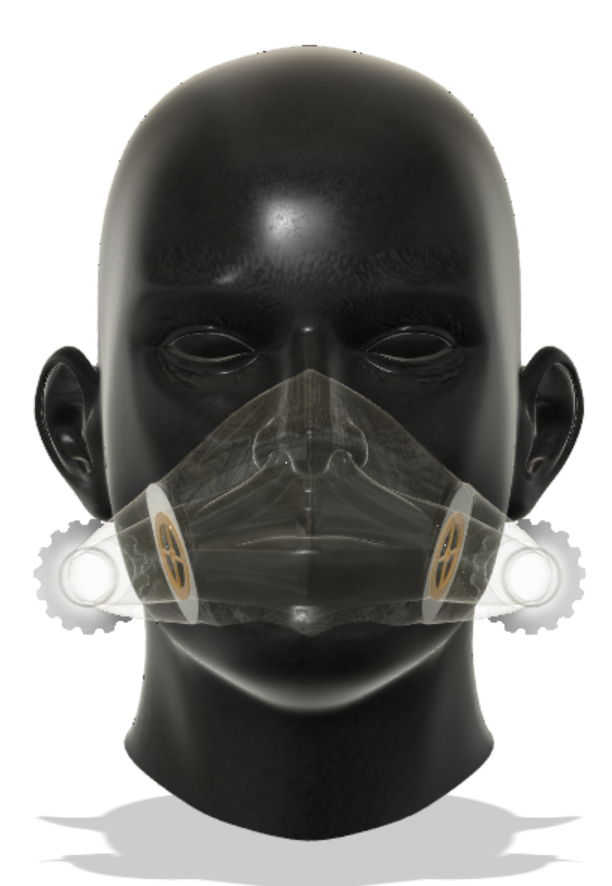
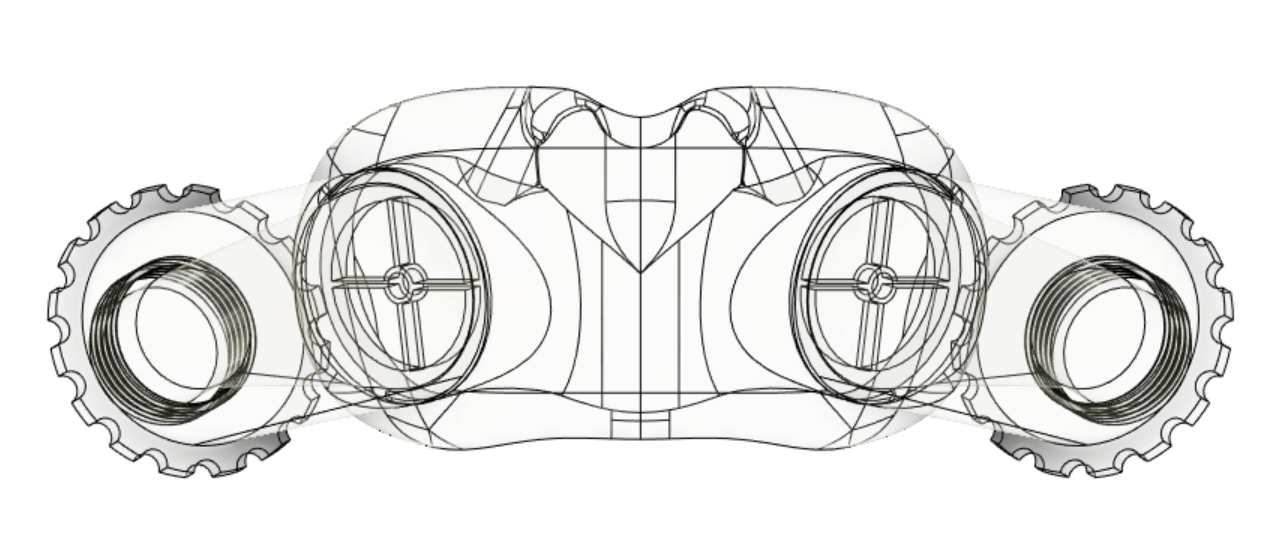
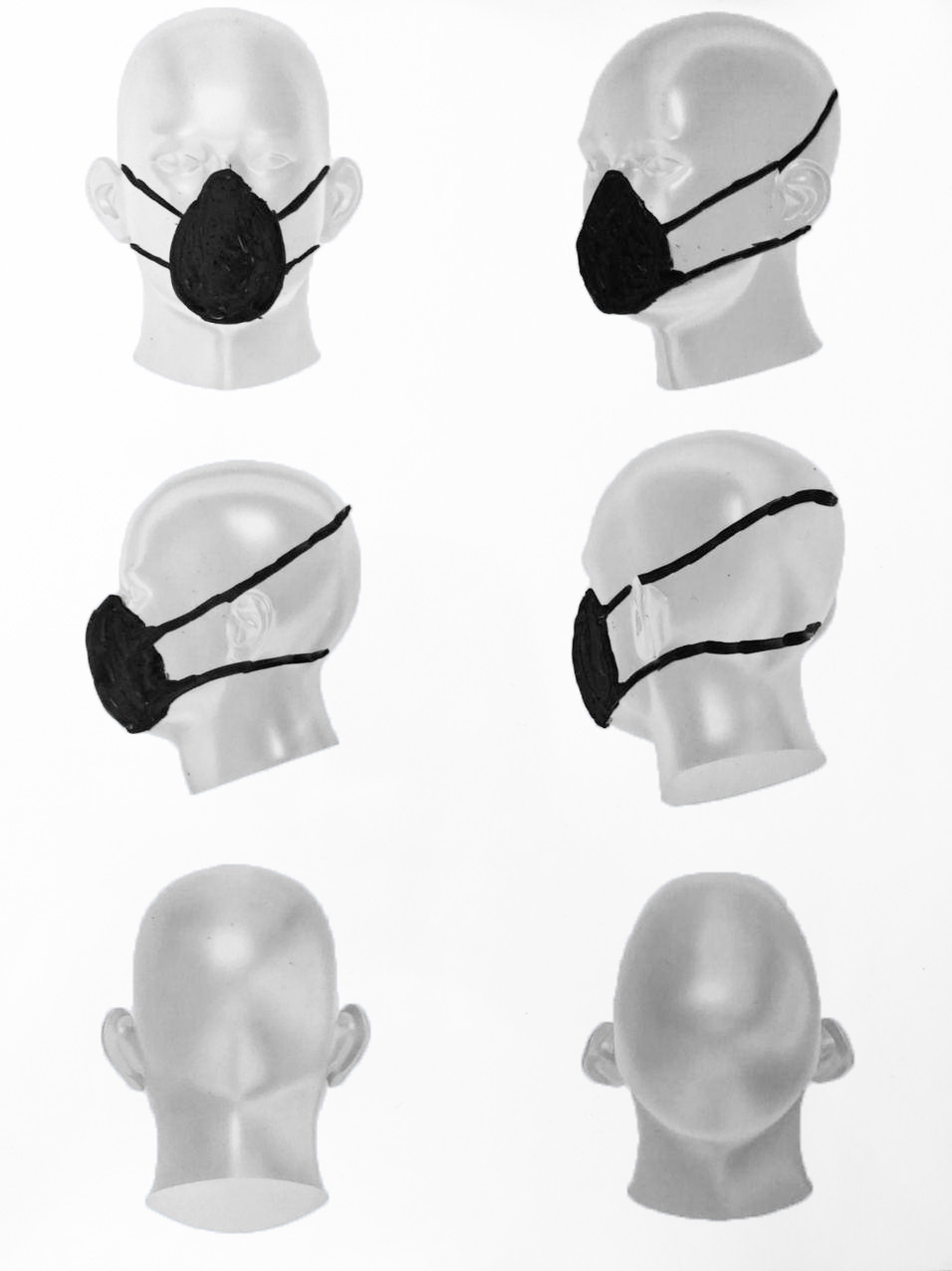
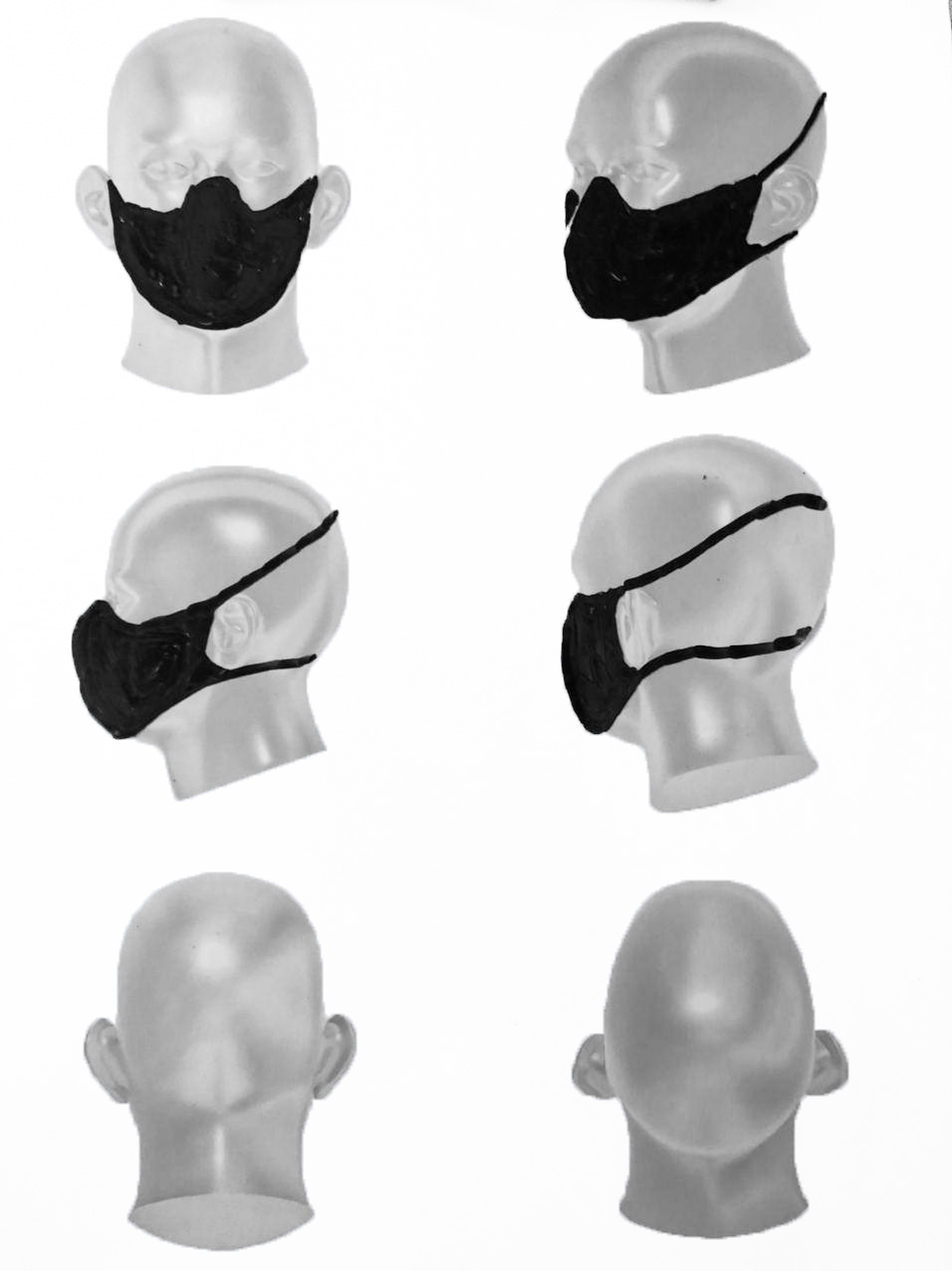
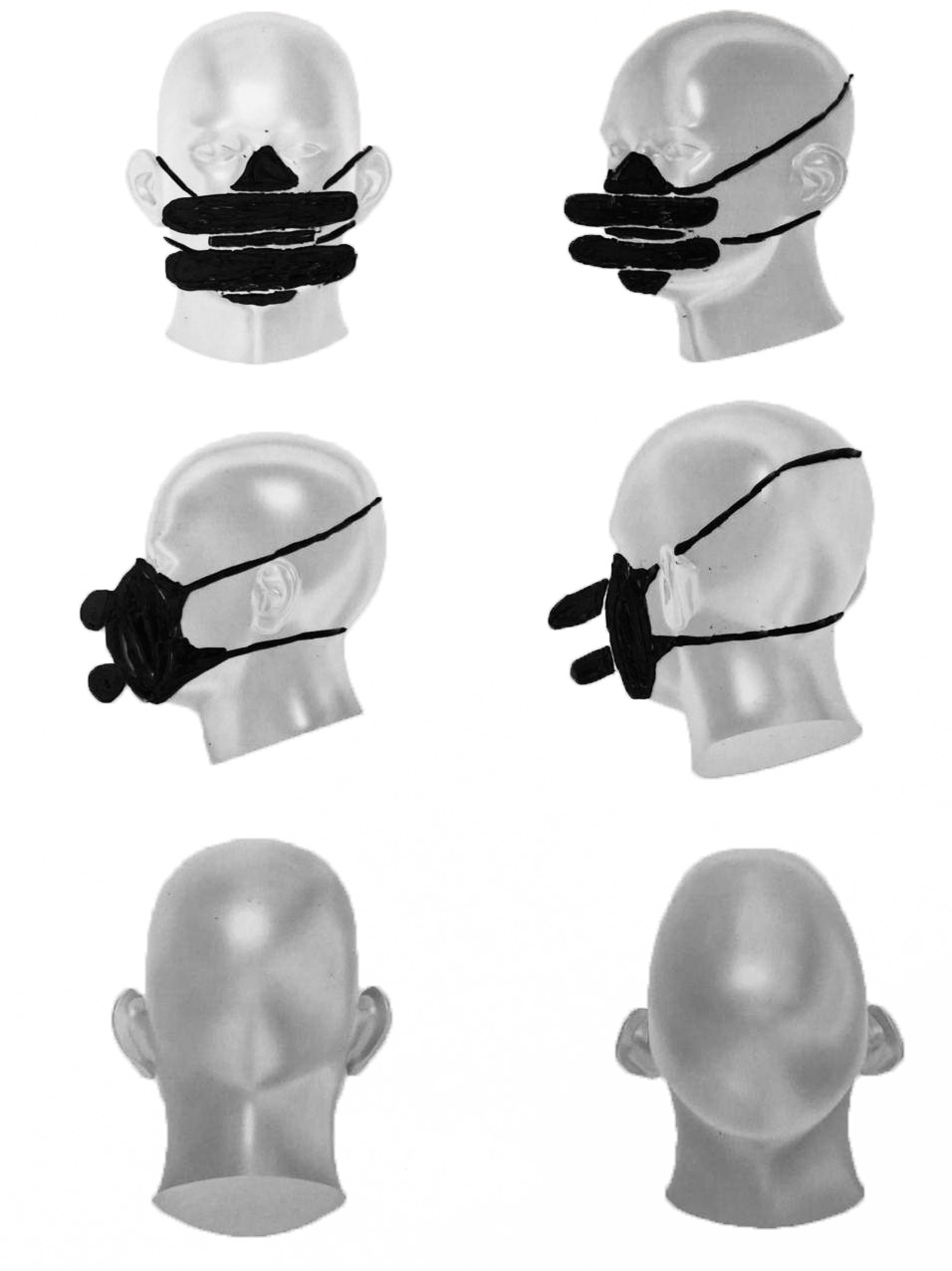
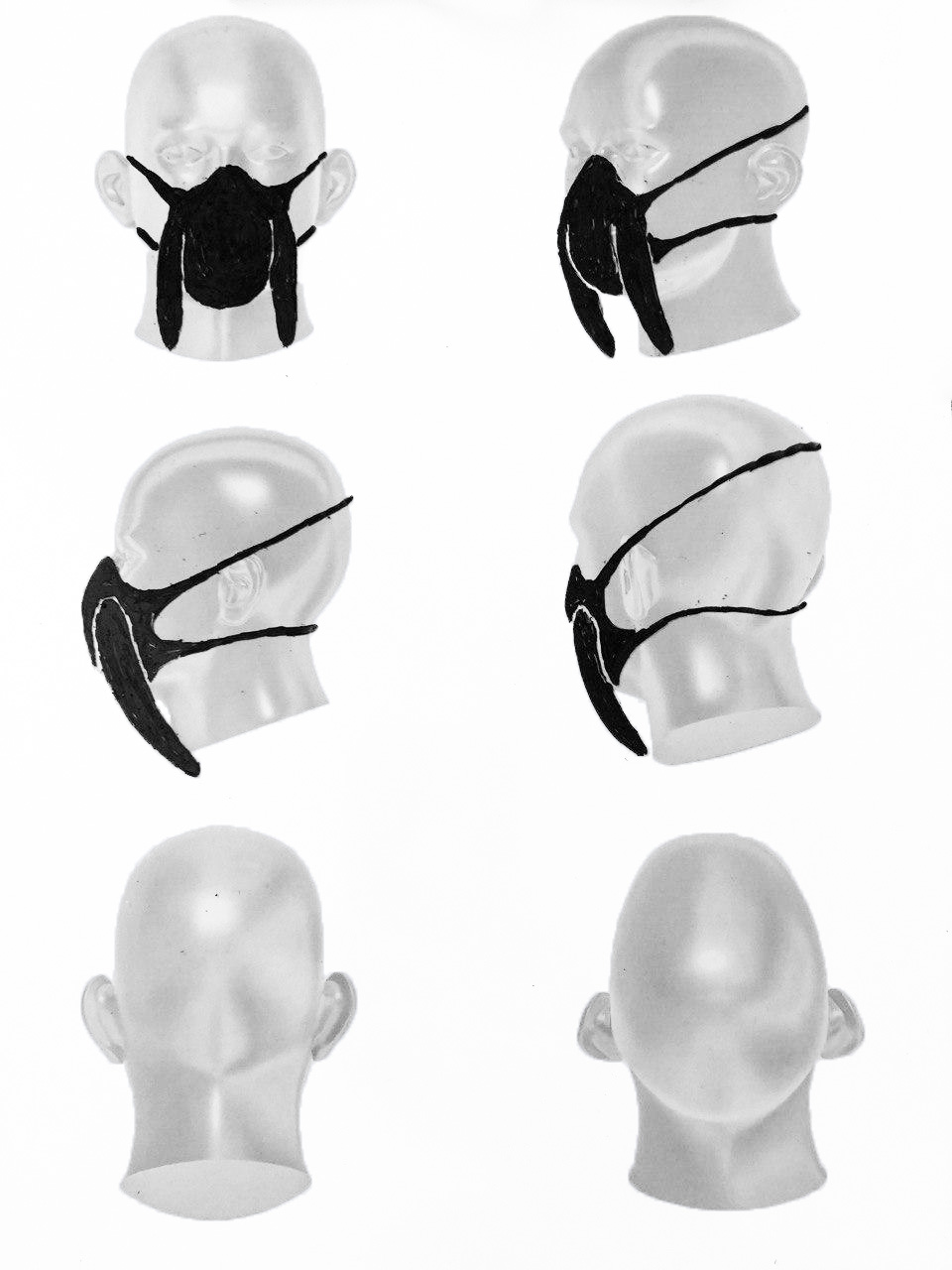
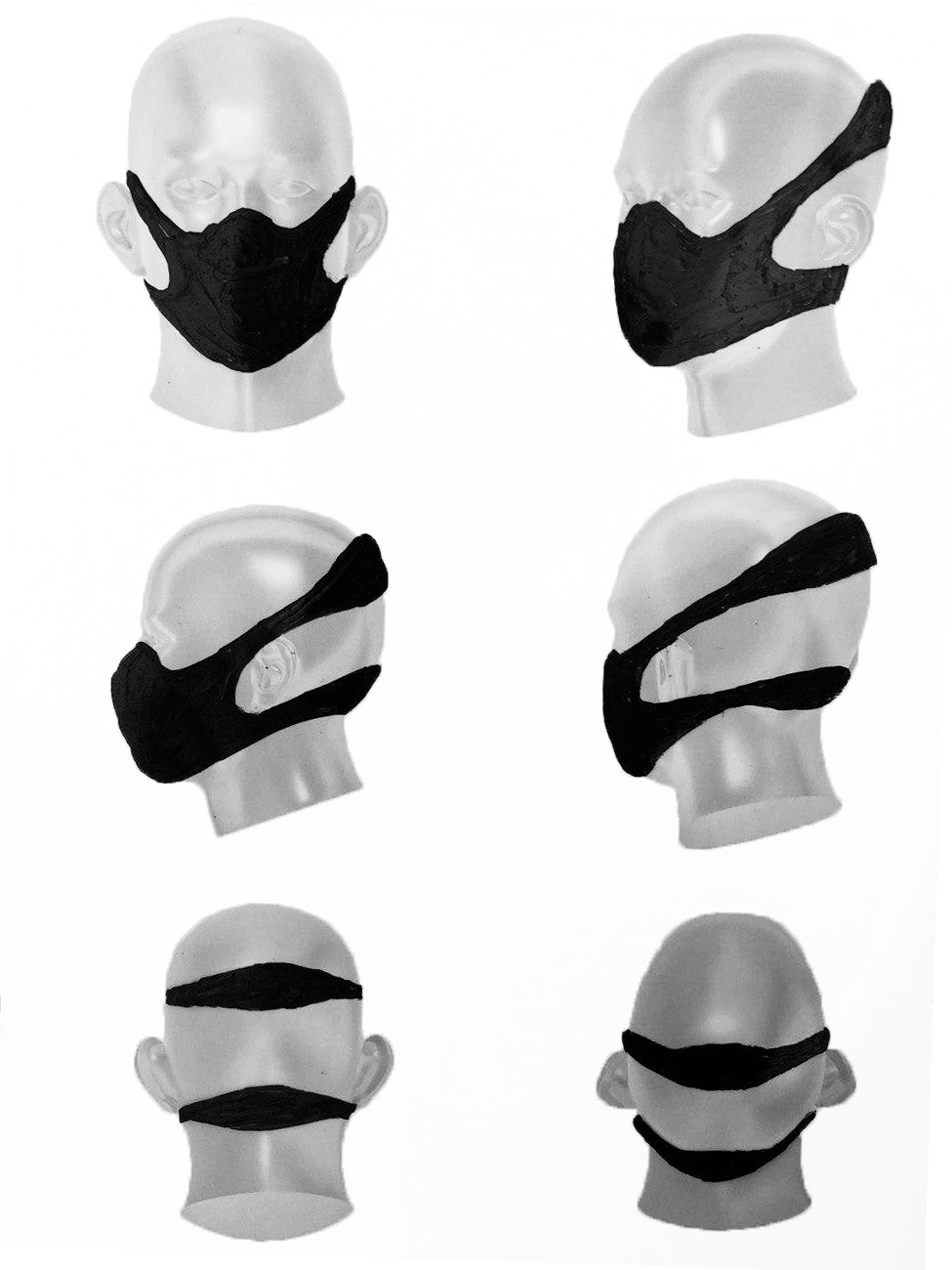
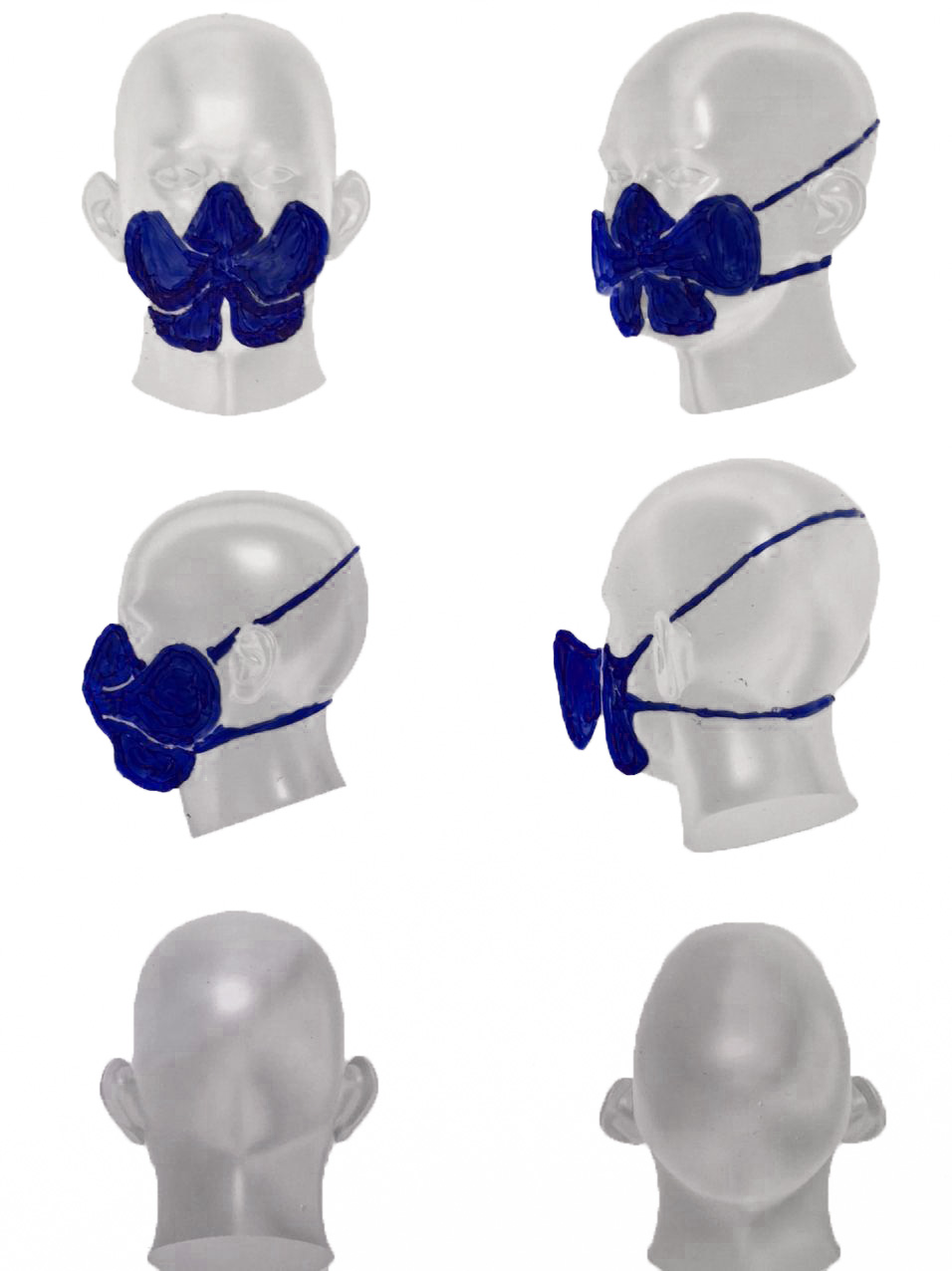
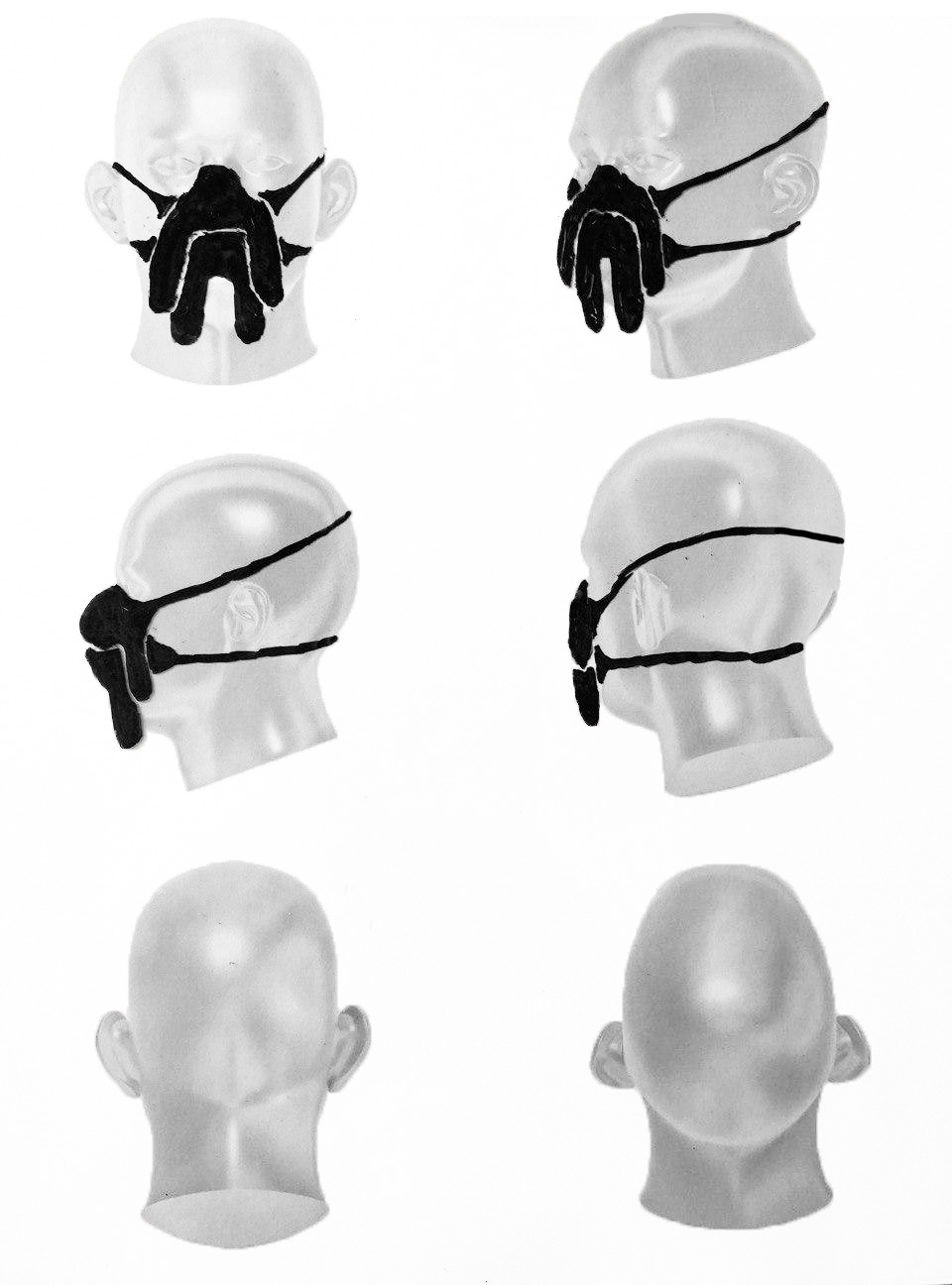
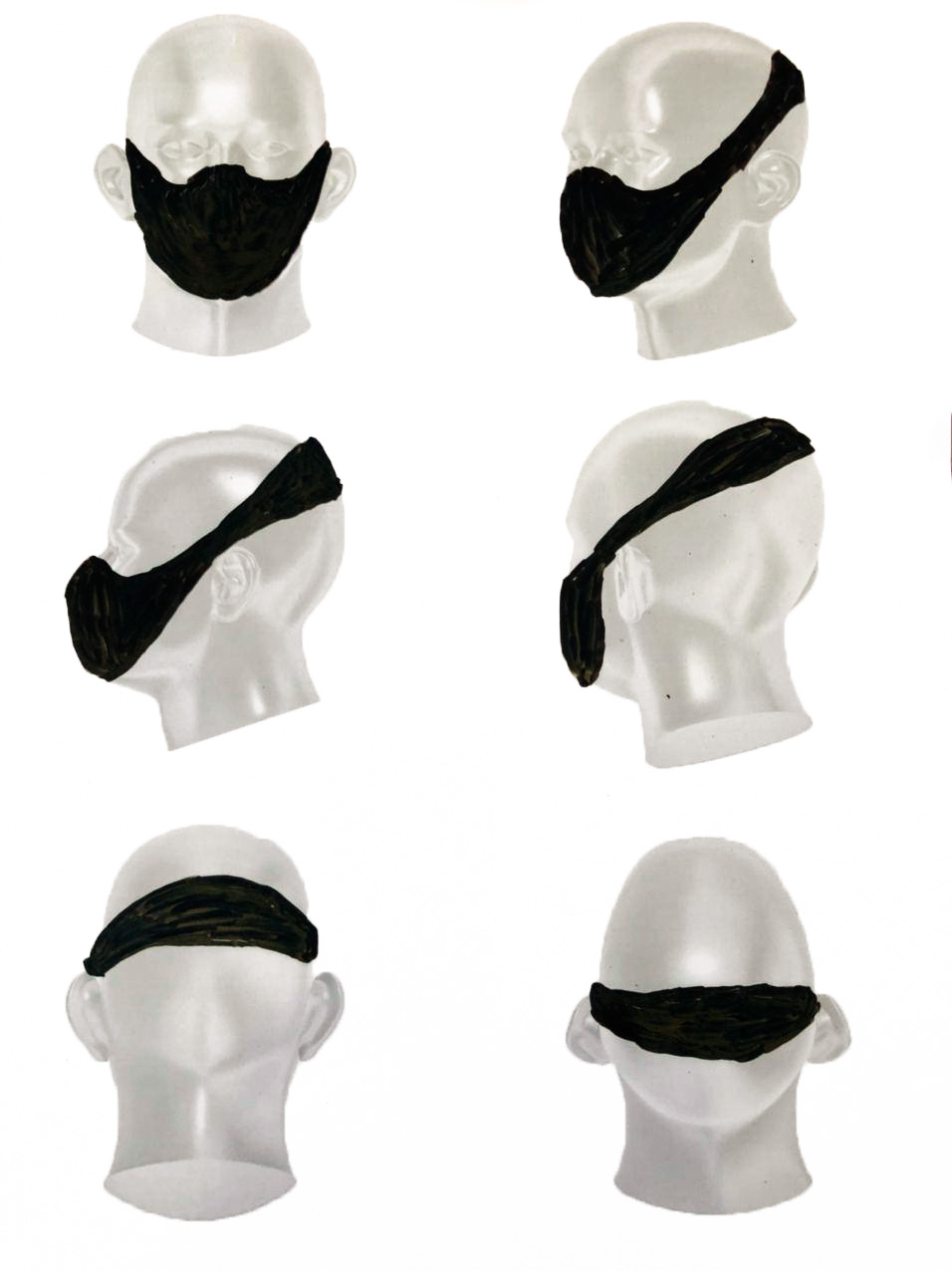
Salazar carried out the development and testing remotely during the pandemic, with Liberty Medical funding the work and receiving progress updates. His evaluations included a five-kilometer run at approximately 7,000 feet in Big Bear Lake. He recalls no perceived loss of breathability compared with running without the prototype, along with comfortable, secure straps. This personal trial brought the design into sustained movement, where fit, weight, and ease of breathing were experienced together.
He delivered prototypes to Liberty Medical and described the invention in detail to patent counsel. The work developed into the published application A Bi-Valve Air Filter Mask, naming Salazar and Outwater as inventors. By winter 2024, he was preparing a batch of twelve respirators for a broader beta-testing effort.
Inspire joined an airflow architecture, folded filter geometry, and a flexible human interface in one working prototype system. More area did not have to mean more space around the mouth; a smaller facepiece could serve breathing, comfort, and conversation together. Those relationships gave the project its direction: protection designed to make participation in everyday life easier.
A Bi-Valve Air Filter Mask
Published patent application · December 7, 2023
US20230390594A1
Inventors: Robert Anthony Salazar and Chris Outwater
Applicant: Liberty Health Technologies Inc.
Robert Salazar / Salazar Design
Respirator architecture, filter geometry, prototype development, and testing.
Liberty Medical
Introduced the challenge and funded development; collaboration initiated with Chris Outwater.