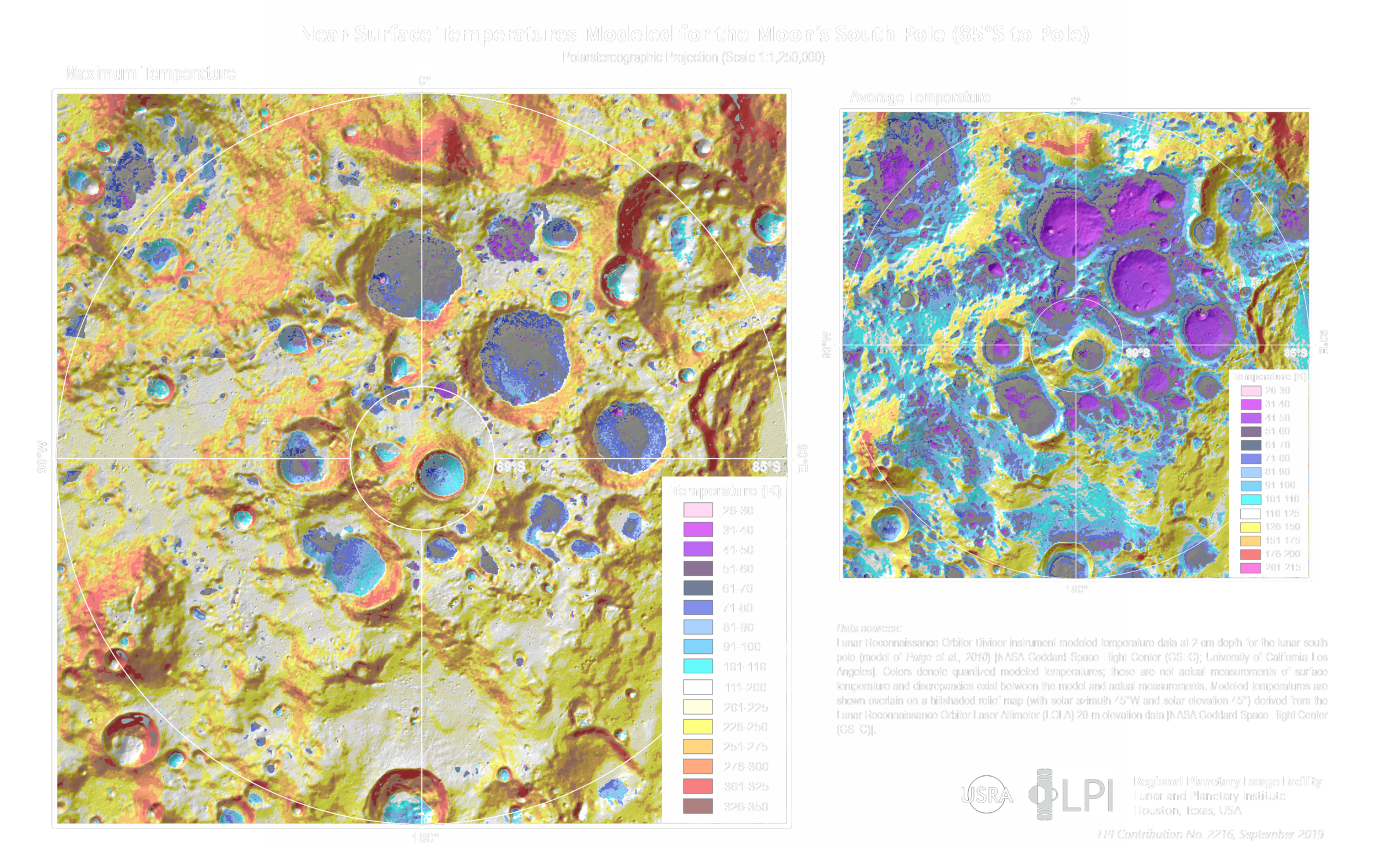
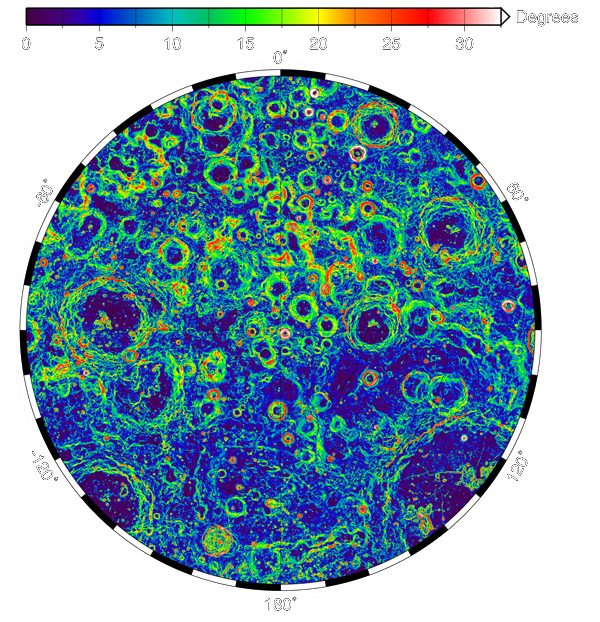
This image shows the slopes found near the south pole of the Moon, poleward of 75 degrees South. The bright red to white areas have the highest slopes (25 degrees or more) while the dark blue to purple areas have the smallest slopes (5 degrees or less). The largest slopes are found in impact crater rims, which appear as brightly colored circular features throughout the image. Image credit: NASA/GSFC/MIT
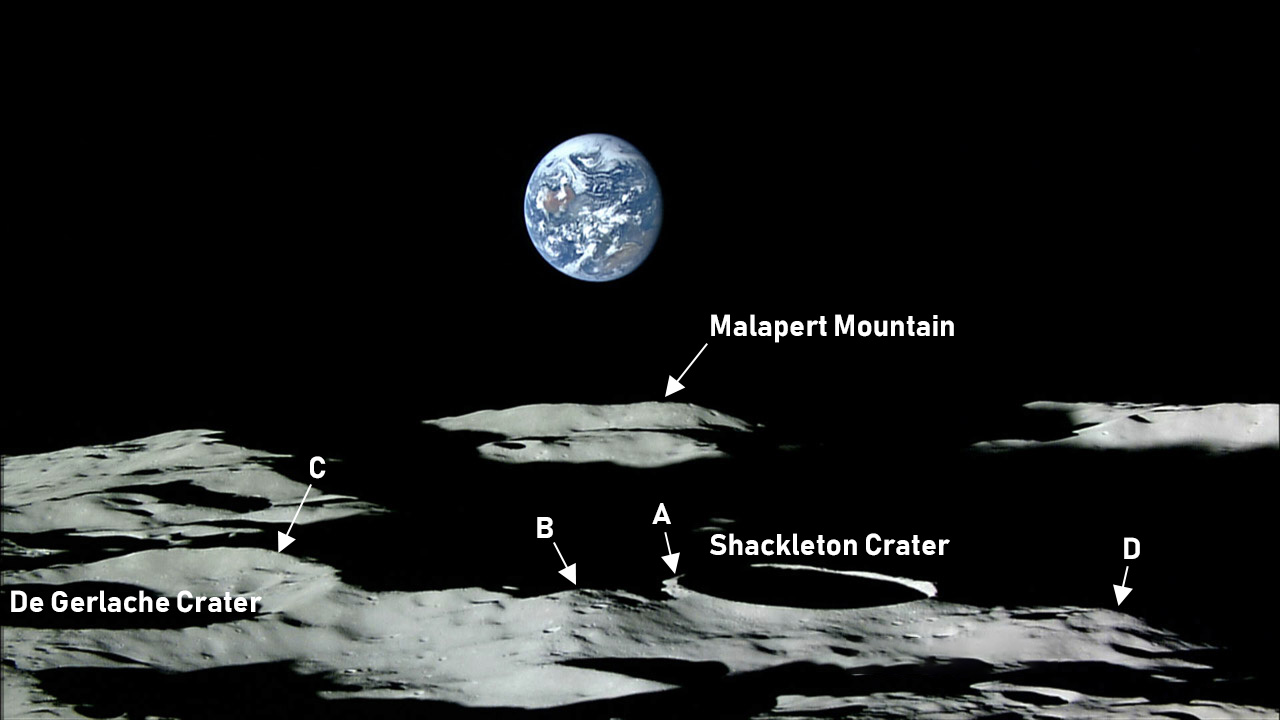
Image taken by SELENE space probe copyrighted by JAXA, modified by Paul D. Spudis and others for published journal article on peaks receiving near continuous lighting on the moons southern pole. Four points are identified which receive lighting more than 80% of a year, and for comparison the Malapert Mountain peaks which can always be seen from earth.
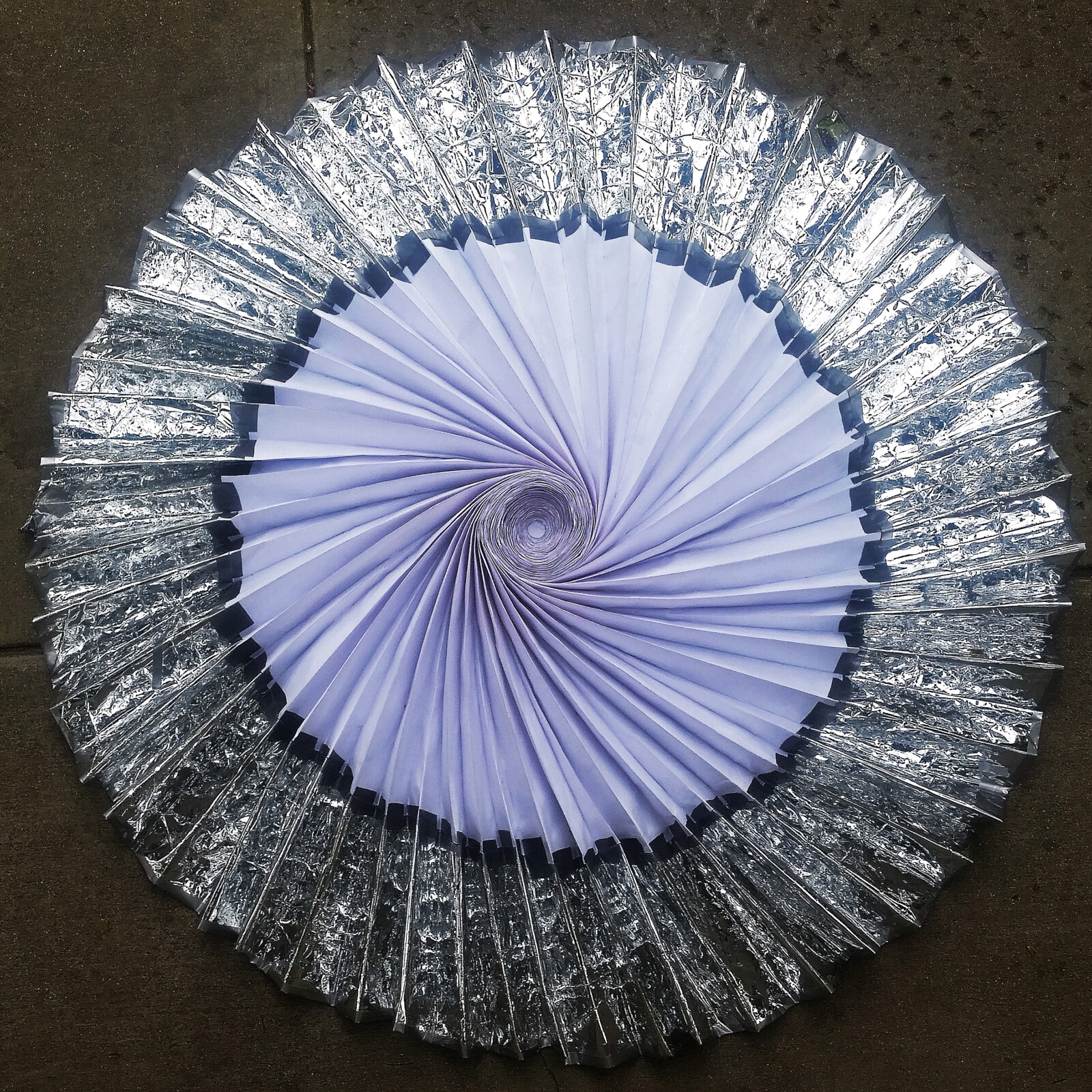
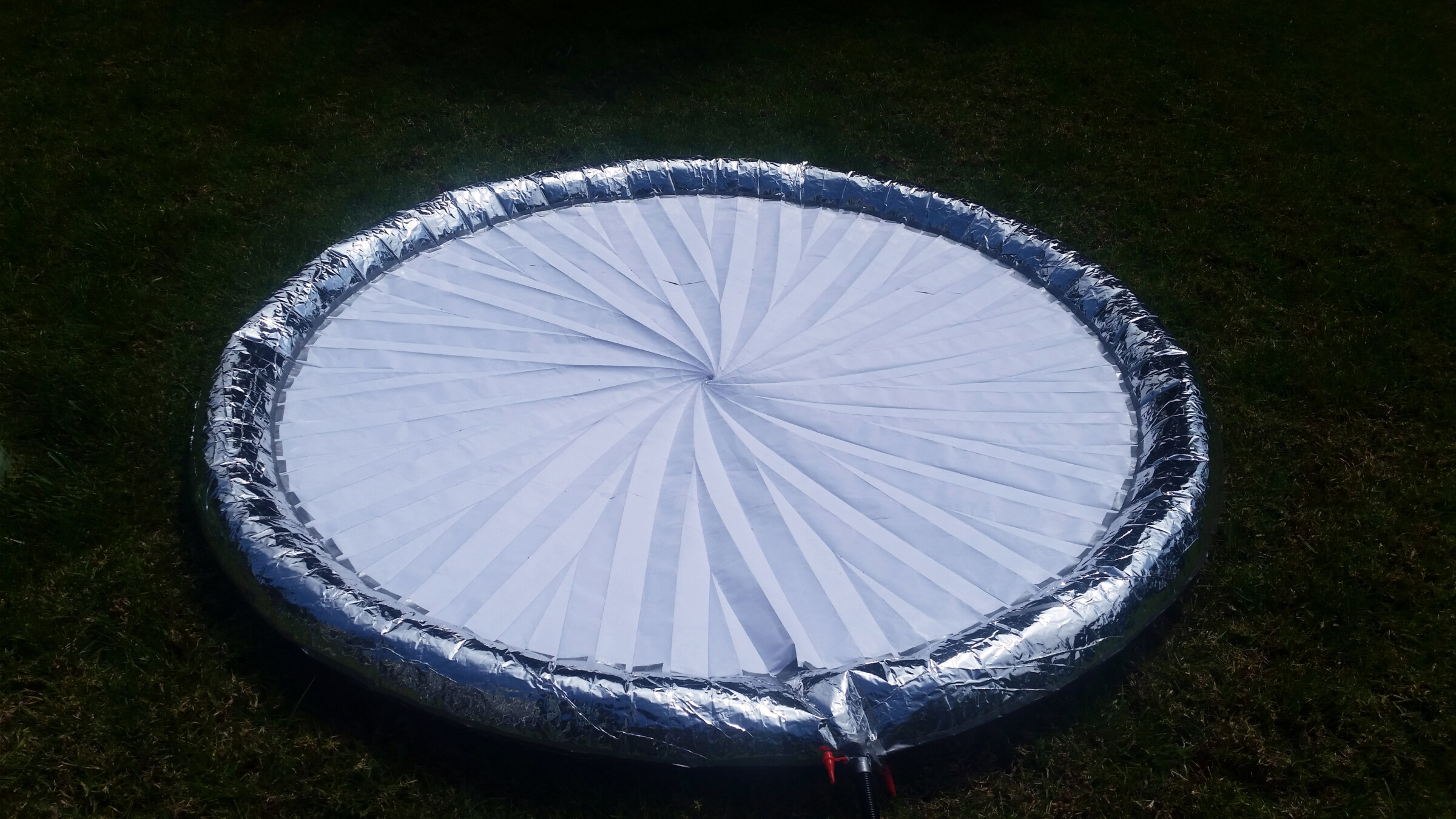
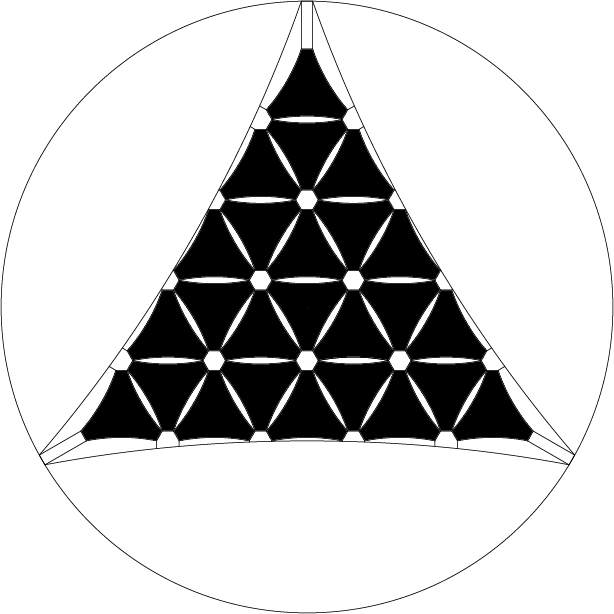
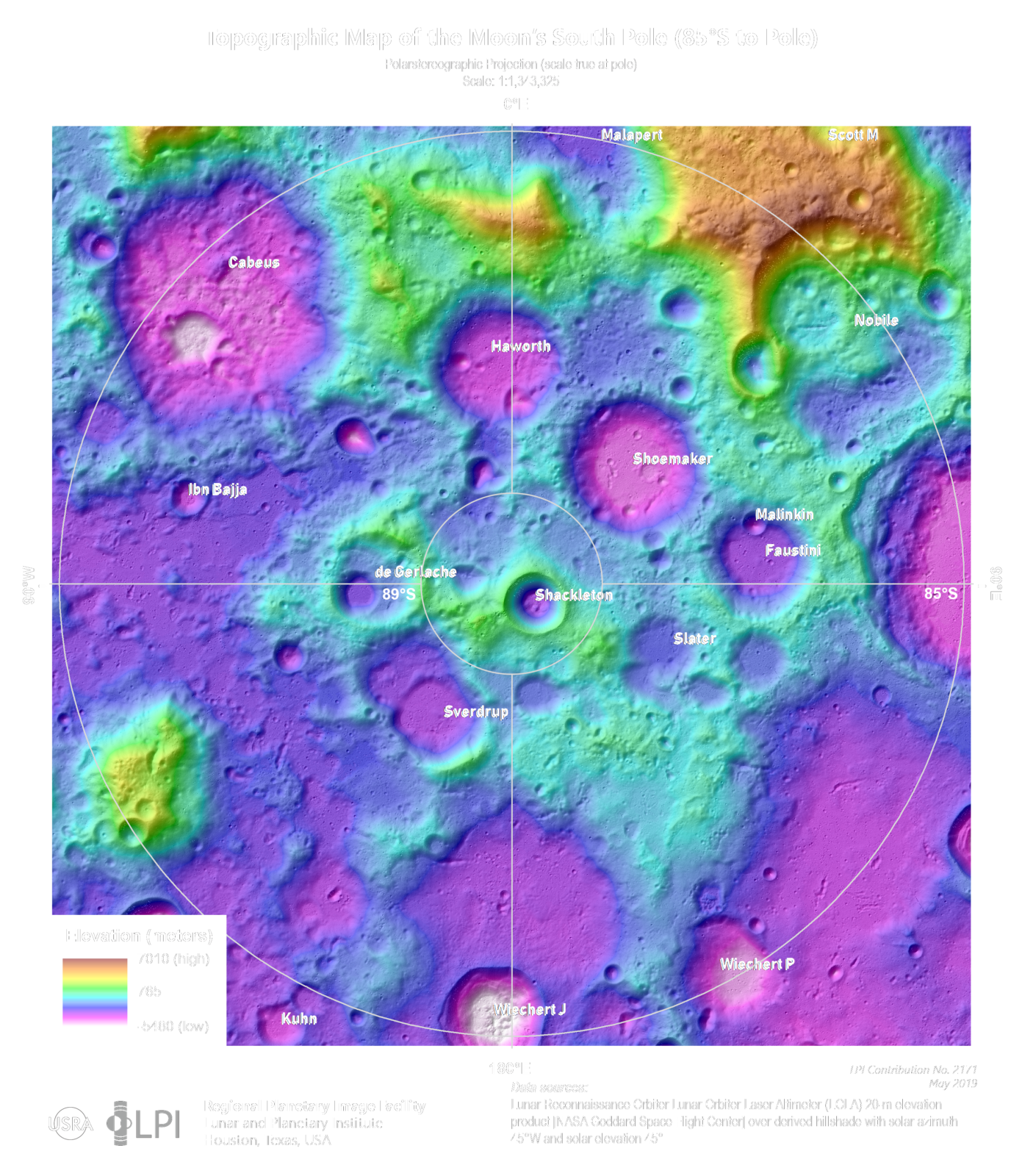
Scientific lab analyses are being performed and icy regolith excavated in the neighboring darkness is brought inside the oasis by robots. About the size of a football field, the oasis lies in a valley about twice the size of Washington DC, surrounded by peaks the size of Mount Rainier. From its low angle on the horizon, the sun’s rays can never reach over the peaks into the valley, where it has remained dark and supremely cold for over a billion years. Heliostats deploy on the surrounding peaks and reflect the sun’s energy down into the darkness to illuminate an oasis of sunlight. Here resides a large science laboratory and the largest off-Earth producer of the liquid hydrogen and liquid oxygen that fuels inter-planetary ships. This is Shackleton crater at the lunar South Pole and the heliostats are the Transformers that project sunlight into an oasis. This is the vision Transformers for Lunar Extreme Environments proposes to bring to life.
Video pending restoration.
Video pending restoration.
Video pending restoration.
Video pending restoration.