

At the Santa Barbara Maritime Museum, folded marine life and an artist’s lecture connected the creatures of the sea with the relationships that give them form in paper.
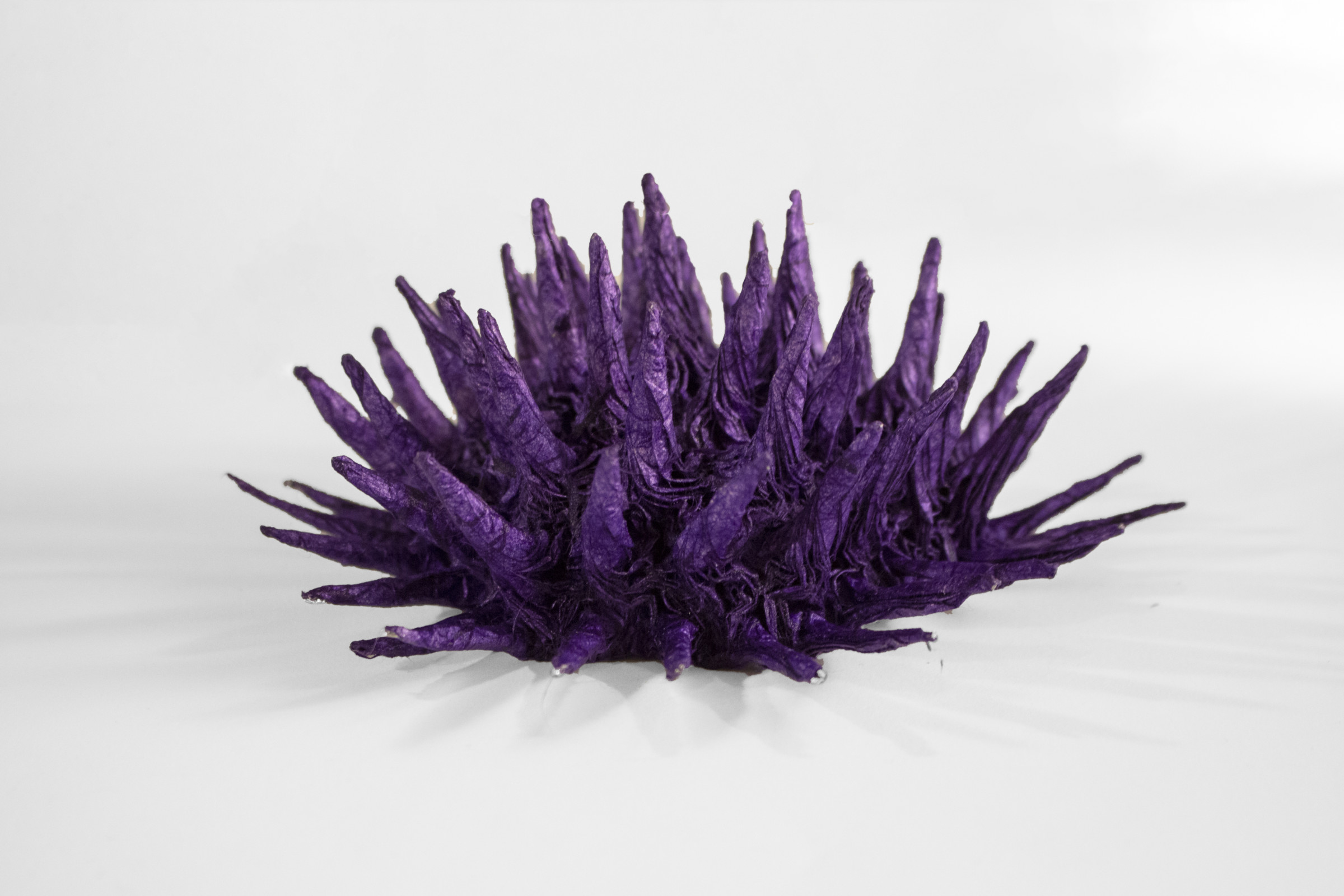
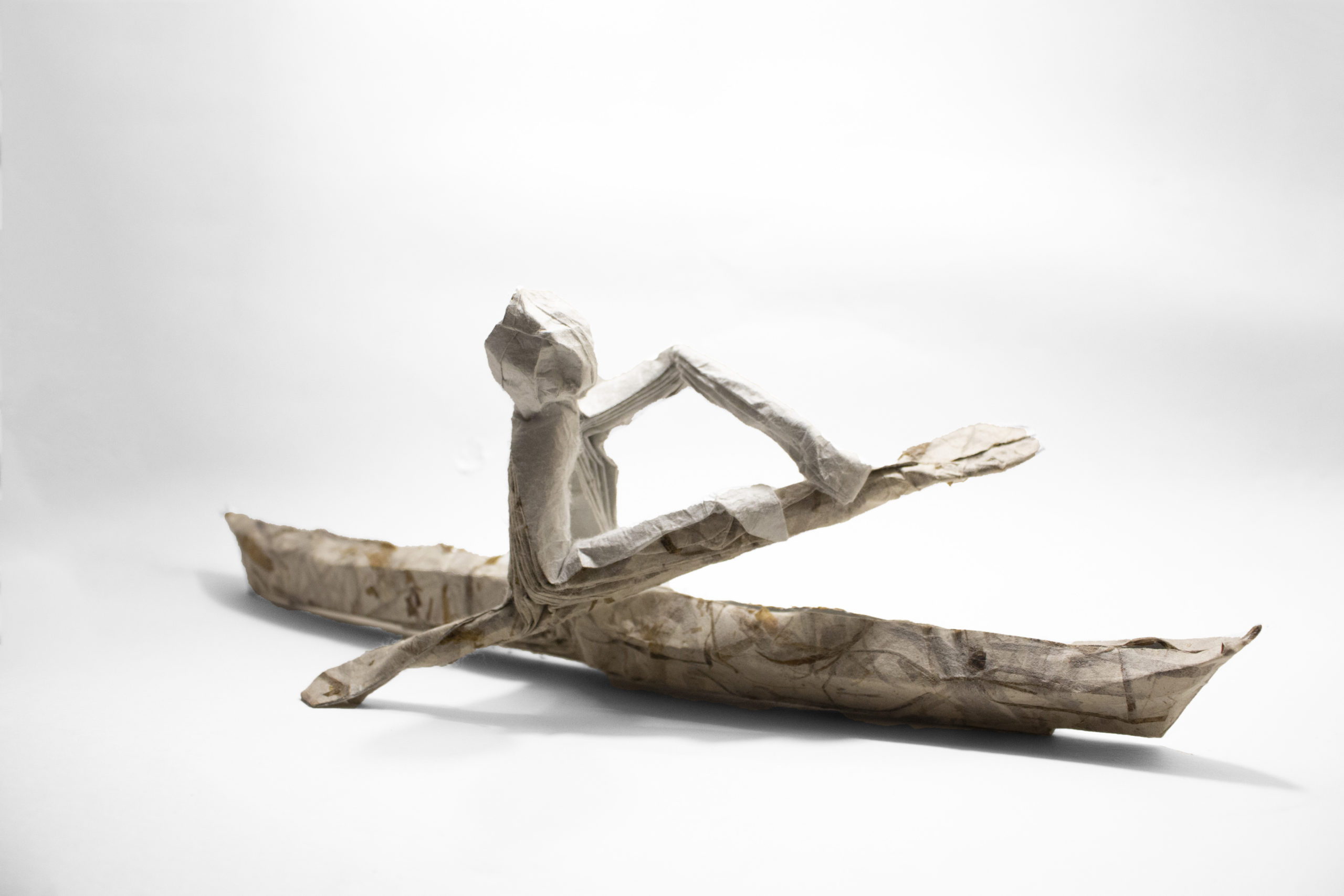
A blue whale, a sea urchin, and a kayaker belong to very different scales of life on the water. In Salazar’s marine collection, they share another setting: each is made from a single uncut sheet of paper. The Santa Barbara Maritime Museum exhibition brought his original works into a place devoted to the sea and the lives connected with it.
On November 8, 2018, Salazar accompanied the exhibition with an artist’s lecture. The evening offered a way beyond recognizing the finished figures: an introduction to the works, their origins, and the maritime wildlife and people they portrayed. The museum’s recording preserves that encounter between the sculptures and their designer.
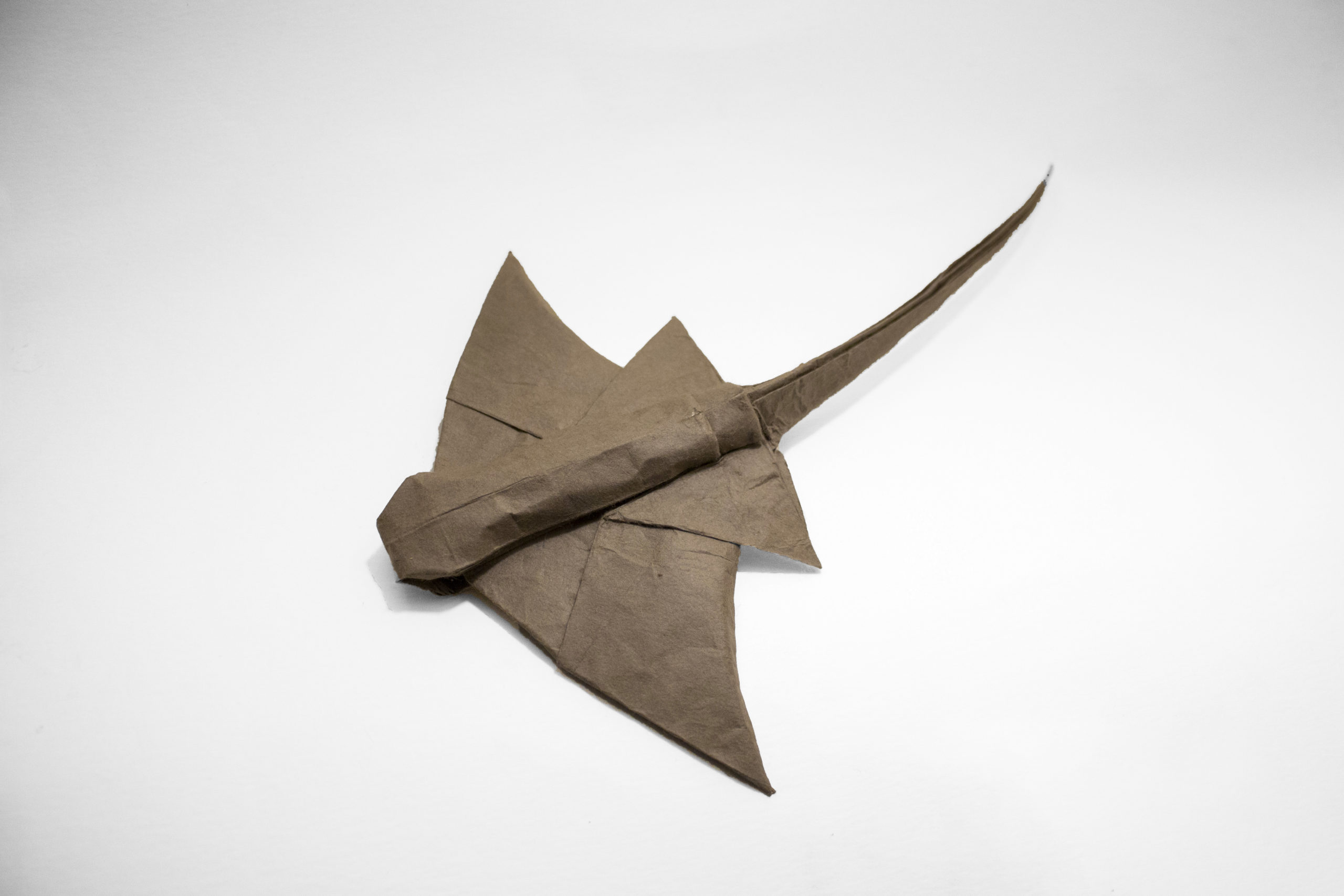
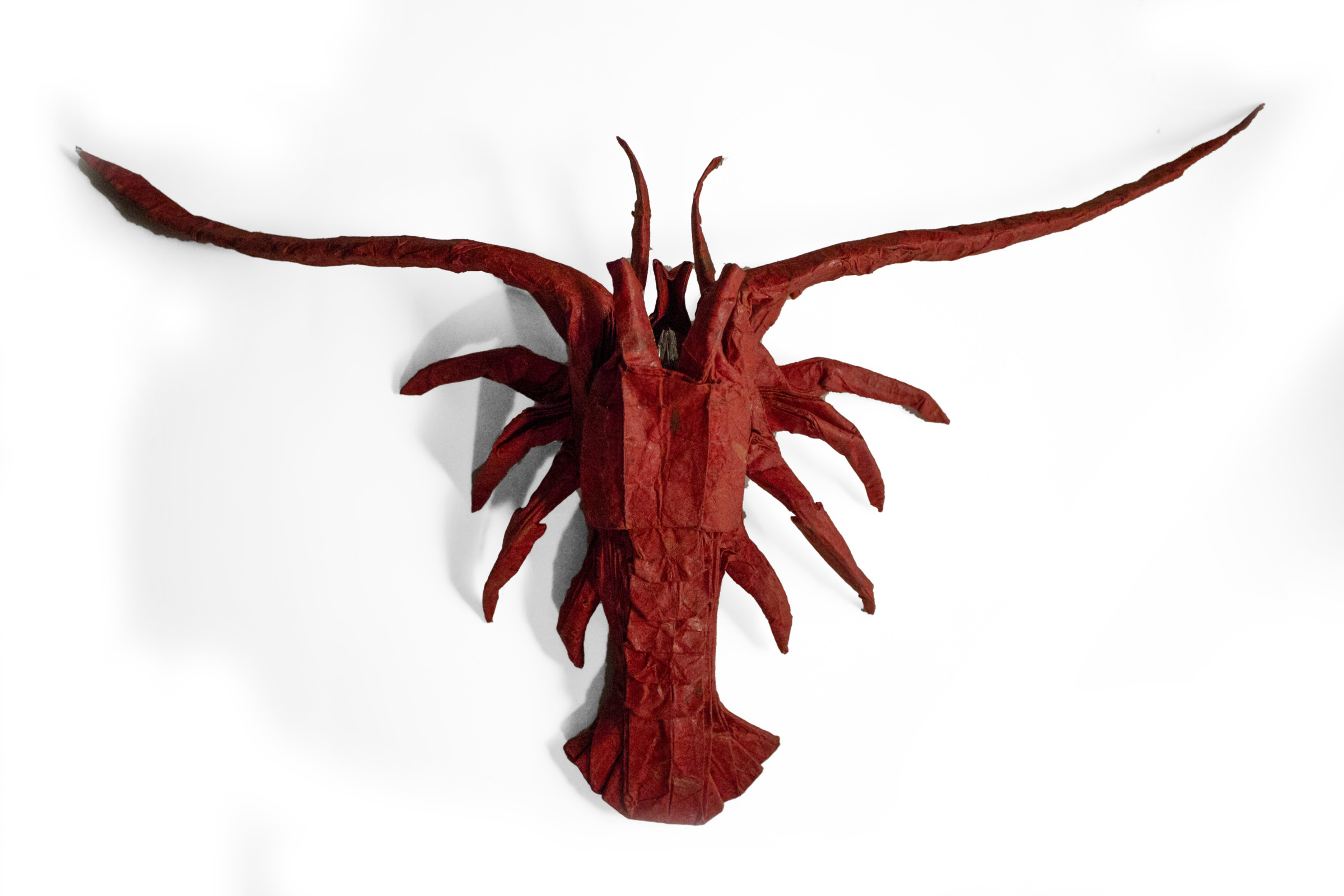
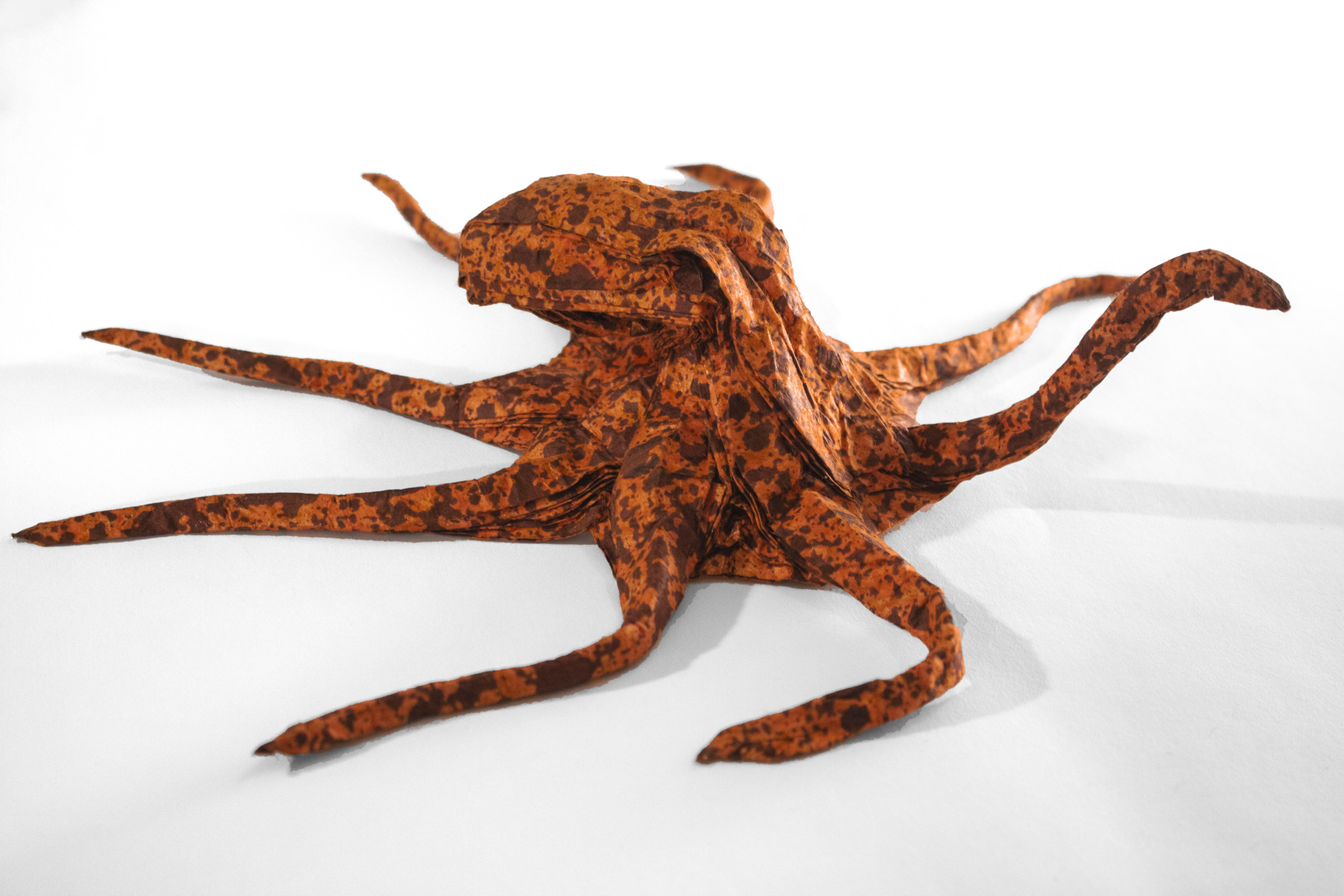
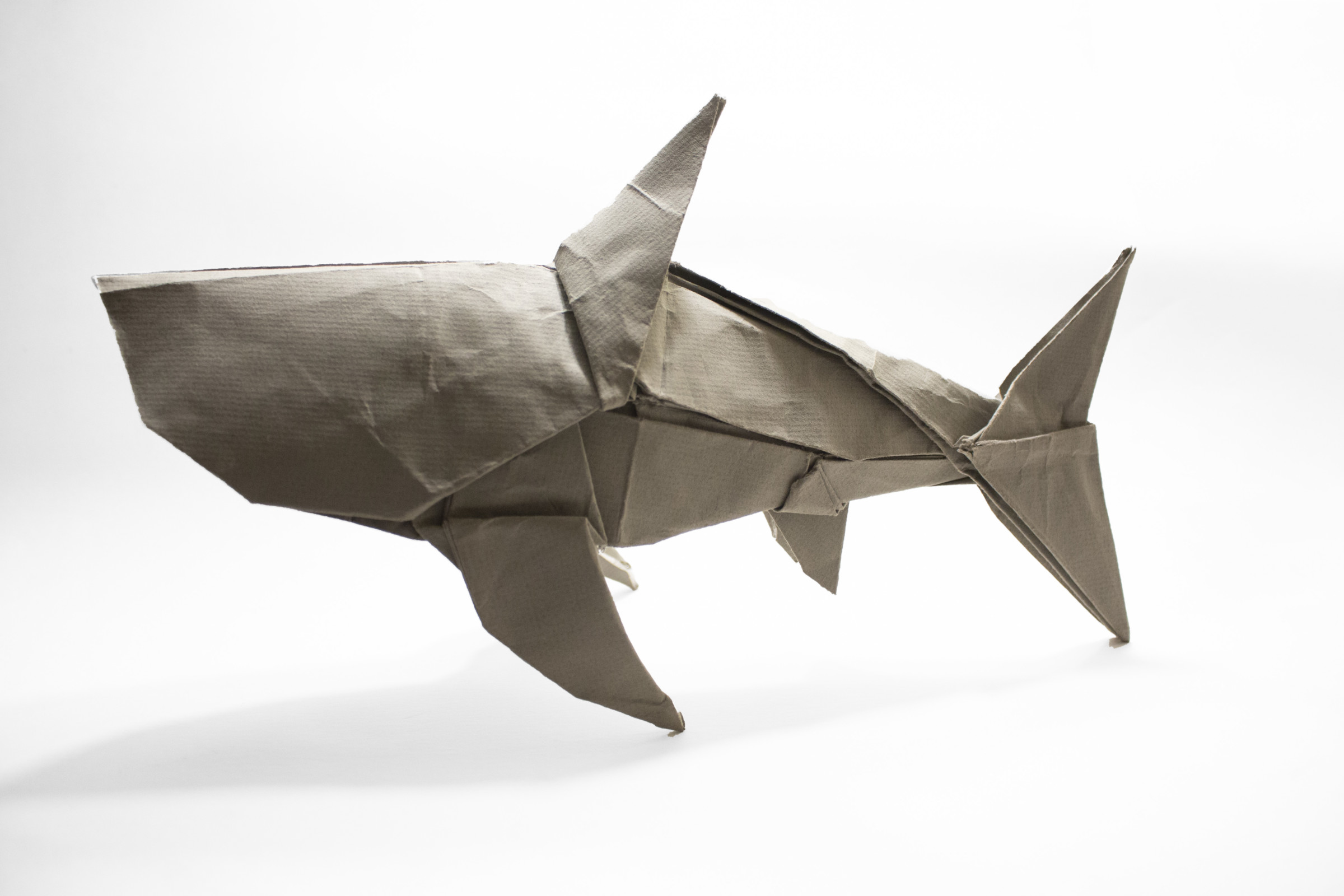
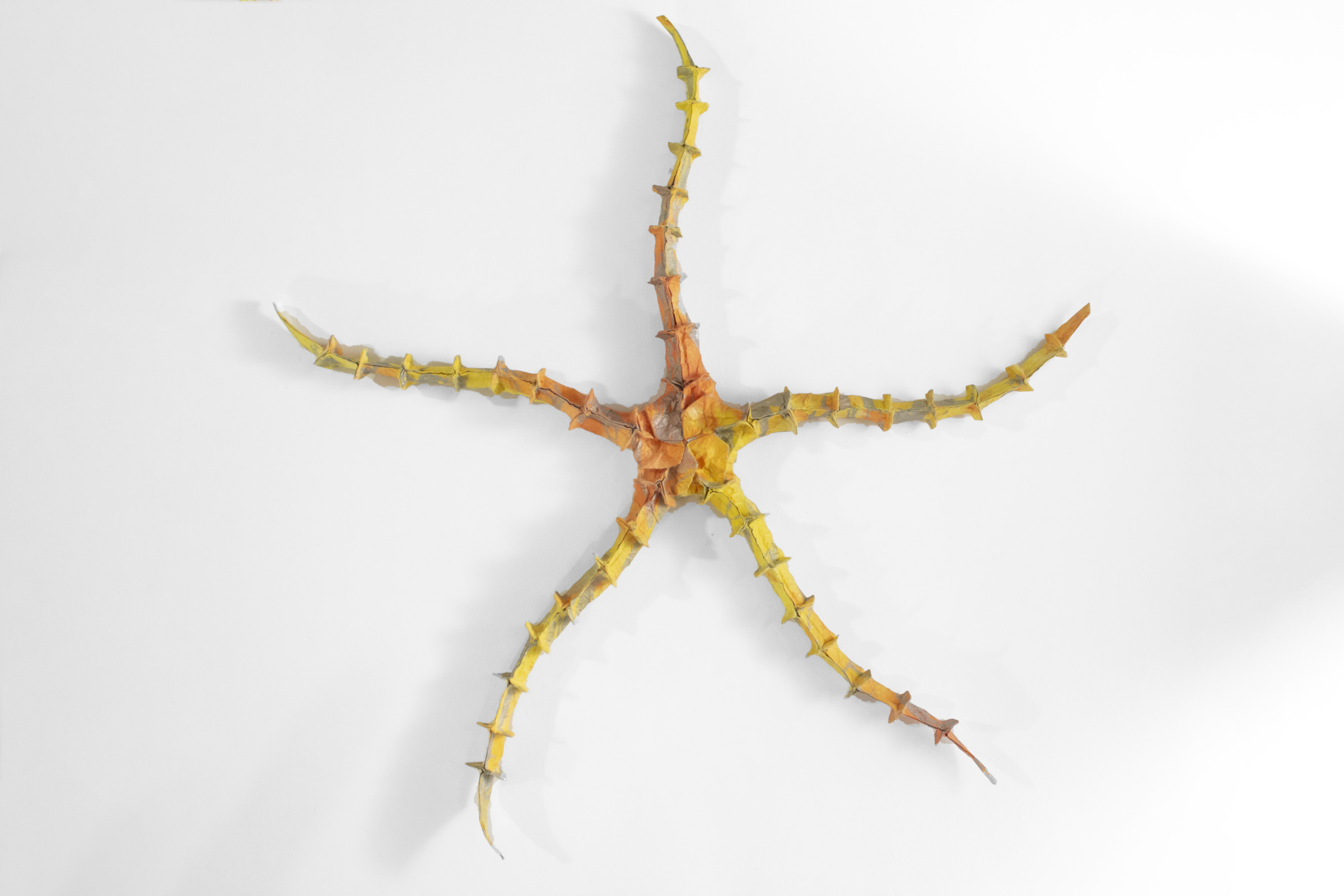
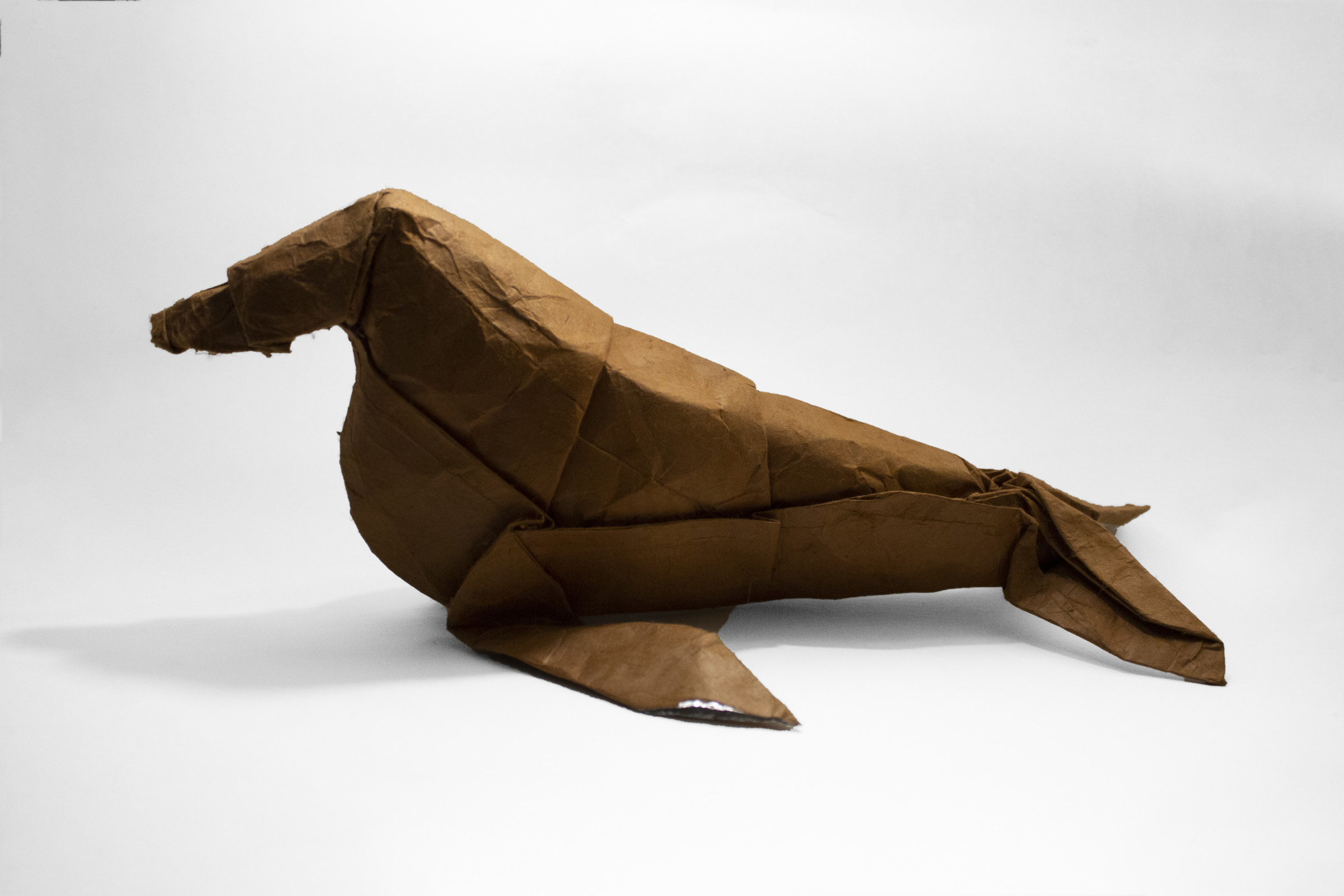
The collection ranges from a brittle star and California spiny lobster to a giant Pacific octopus, California sea lion, great white shark, and bat ray. A kayaker places a human figure within this gathering of marine life. Together, these subjects give the exhibition a breadth that extends beyond a single animal or a single way of inhabiting the water.
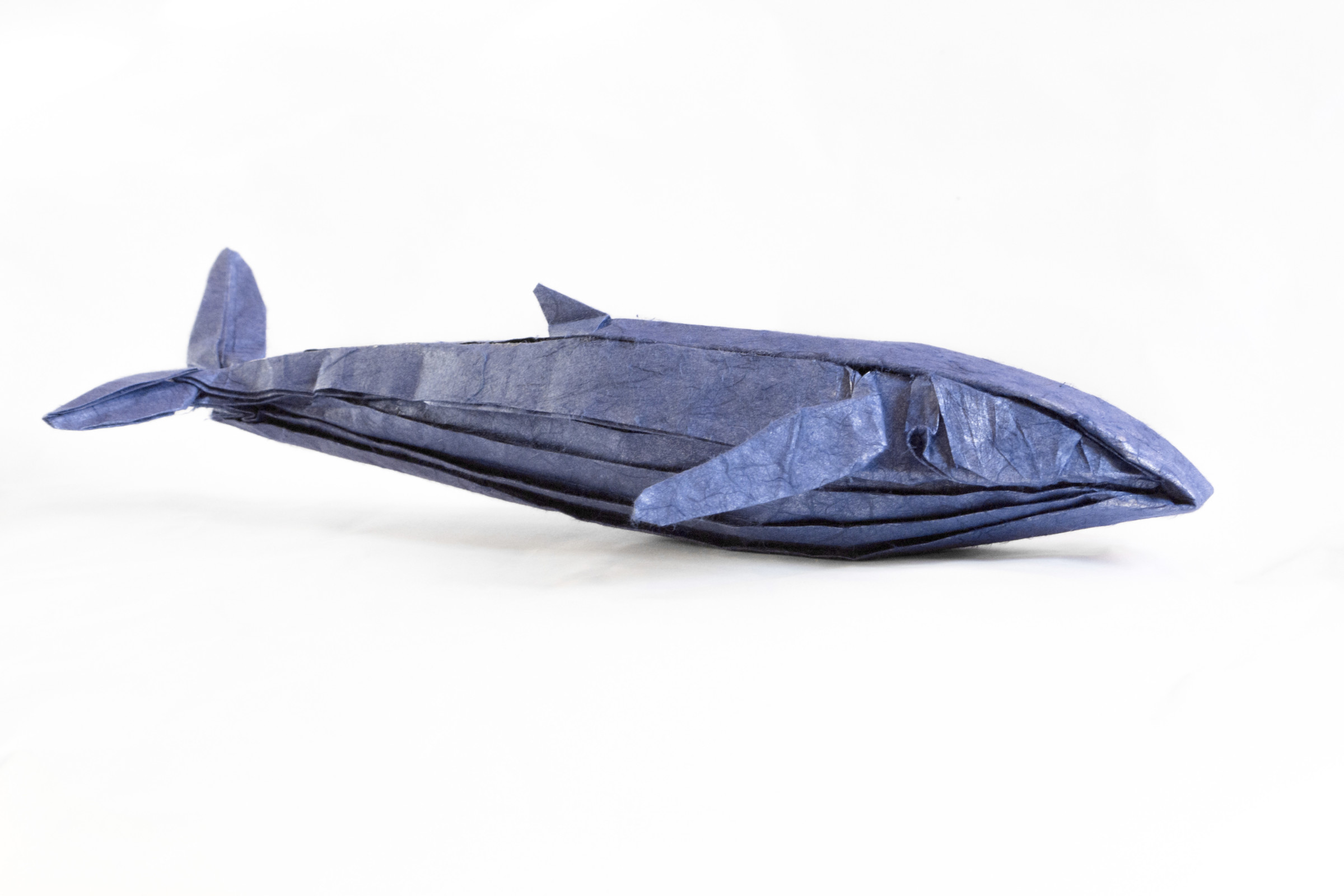
Their starting shapes are equally varied. The brittle star was designed and folded from a pentagon of marbled momi foil paper; the octopus from an octagon of foil paper; the blue whale from a square of unryu foil paper. The figures retain the continuity of those sheets even as their folds produce very different bodies. Looking closely means following how the parts of an animal remain connected through the paper.
That continuity was central to the ideas Salazar brought to the museum. A fold changes more than an isolated feature: it changes the paper shared with neighboring features. As a design develops, those relationships become more numerous. Learning to work with them allows increasingly elaborate forms to emerge without cutting the sheet apart or adding another one.
Salazar’s wildlife art carries this attention beyond the finished object. Through Origami for an Interdependent World, it serves a commitment to conservation. At the Maritime Museum, the works and lecture offered two ways to begin exploring that connection: encountering a creature in folded paper, then hearing the artist trace the relationships behind its creation.
Robert Salazar’s artist lecture at the Santa Barbara Maritime Museum, November 8, 2018. Recording: Santa Barbara Maritime Museum.
Origami is a unique art form in that any one origami can be transformed into any other by folding alone.
The artist, scientist, and activist, known for his intensely detailed origami works of art, has a lot going on besides folding paper.

California Museum of Art and Nature · November 10, 2018