
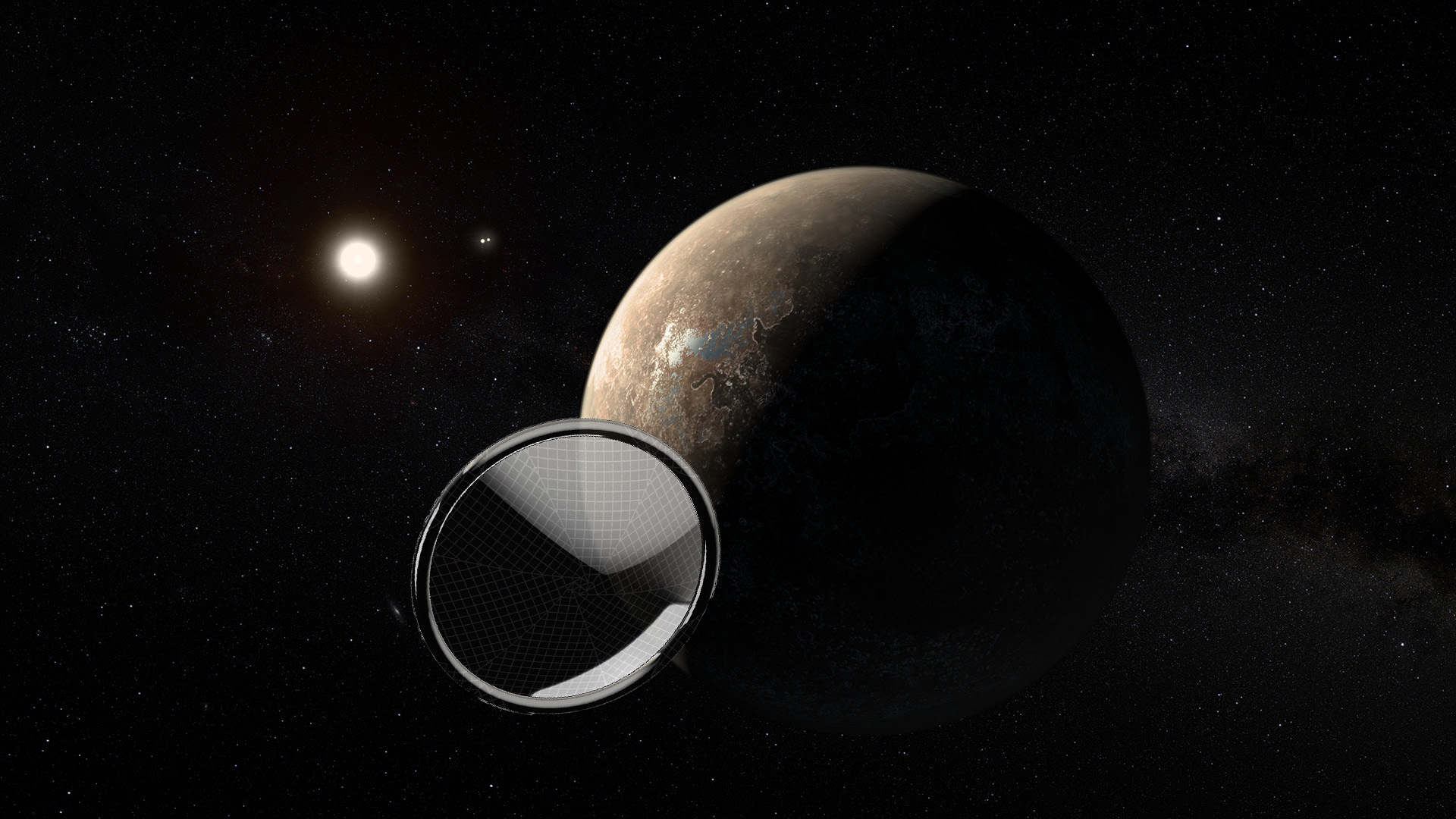
Beyond the familiar planets is a world whose nature we have only begun to infer. Proxima b circles a small, active red star about 4.2 light-years away. A probe passing close by could begin to reveal whether that world has an atmosphere, how its visible regions differ, and what conditions have taken shape beneath a very different sun.
Starlight sought to put encounters like this within a human lifetime. The mission concept called for very many small probes sent toward Alpha Centauri, with ideal journey times of ten to forty years. Only a few would need to survive and fly past desirable targets to return discoveries. Proxima b was a particular objective within that larger ambition to explore our neighboring stellar system.
At the University of California, Santa Barbara, principal investigator Philip Lubin led the effort. Robert Salazar oversaw spacecraft architecture: the sail and its supports, the support for a wafer-scale electronic payload, and the protection that payload would need. Before any of it could explore another star, it faced a formidable departure. The laser beam intended to accelerate the spacecraft could also vaporize it.
Alpha Centauri offers more than a single planetary destination. Its three stars create markedly different environments: A resembles our Sun, B is smaller and cooler, and Proxima is a small red dwarf with intense stellar activity. Proxima lies roughly a fifth of a light-year from A and B. A fleet could spread the opportunities for exploration across this widely separated family, with different trajectories reaching different targets. (NASA: Alpha Centauri’s three-star system; Kervella and colleagues: Proxima’s orbit around Alpha Centauri)
Close observations could show how another star releases energy and shapes its surroundings. Measurements during the crossing could also investigate the gas, dust and magnetic fields between stars, giving us a view from within a region largely studied from afar. The eventual instruments and trajectories would determine the observations. Together, those encounters could help explain how stellar environments differ from the one in which Earth formed. (Later mission research: observing Proxima and its environment; Lubin: exploring the interstellar medium; Later mission research: science during the crossing)
Proxima b makes that comparison especially compelling. It completes an orbit in about eleven days, close to a star much cooler and dimmer than our Sun. At that distance it receives an amount of starlight compatible with liquid surface water, provided it has a suitable atmosphere. Whether it has retained an atmosphere or water remains unknown. A potentially rocky planet so near our own system offers a place to begin investigating those questions directly. (NASA: our neighboring star system; NIRPS observations: Proxima b’s orbit and minimum mass; NASA: Proxima b and the question of its environment)
The star is central to the mystery. Proxima’s flares expose nearby planets to intense radiation: could an atmosphere endure, and could it regulate the planet’s temperature? The planet may also keep one hemisphere facing the star, with permanent daylight on one side and darkness on the other. An atmosphere and any oceans could carry heat between them. A close encounter could help distinguish among very different possible worlds. (ALMA: Proxima Centauri’s flares; Proxima b: possible climates and observability)
What we learned would reach beyond this one planet. Red dwarfs make up roughly three-quarters of the stars in our Galaxy. Understanding how a world fares beside one would inform our picture of planetary environments throughout the Galaxy. With suitable instruments and a close enough passage, images and spectra could investigate clouds, ice, exposed terrain or possible water. Even a first resolved view would begin turning a planet known through its influence on starlight into a place with a character of its own. (NASA: red dwarfs and the stellar population; Lubin: the possibilities and requirements of flyby imaging; Later mission research: possible observations of Proxima b)
The many probes would share the ambition of reaching Alpha Centauri, with different trajectories offering different encounter opportunities. Along the way lie regions to explore: the edge of the solar wind, the Sun’s distant comet reservoir, and the space connecting neighboring stars.
Distances are approximate and spacing is schematic. AU means the average Earth–Sun distance. Distances are measured from the Sun, except Voyager’s dated Earth-distance benchmark.
A brief period of intense laser illumination would give the spacecraft the momentum for a journey lasting decades. The powerful light source stays behind as the small explorer begins its crossing.
Neptune’s orbit and the icy bodies of the Kuiper Belt put the first tens of AU in perspective. They are concentrated near the planetary plane; trajectories toward Alpha Centauri would pass their distance from the Sun without necessarily visiting those bodies.
NASA: the Kuiper Belt
Here the outward flow of the solar wind gives way to the surrounding interstellar plasma. Voyager’s crossings provide a distance reference, but the boundary changes with direction and solar conditions. The Sun’s gravity and its distant comet reservoir extend far beyond this transition.
Voyager measurements of the heliopause
On November 18, 2026, Voyager 1 became the first spacecraft one light-day from Earth: its radio signals take a full day to reach us. An interstellar probe would eventually exceed that distance on its own route, carrying exploration beyond today’s most distant human-made object.
NASA: Voyager’s one-light-day milestone
Beyond roughly 550 AU, a correctly aligned telescope could use the Sun’s gravity to magnify a distant source; imaging concepts generally work beyond 650 AU. This is an extended focal region, rather than a single point. Using it to observe Proxima would require a separate mission on the opposite side of the Sun from Proxima. Here it marks a significant distance and a related exploration opportunity.
Solar gravitational-lens imaging · Alignment for Proxima and Alpha Centauri
Far beyond the planets, the spacecraft would reach the estimated inner extent of a vast, sparse population of icy bodies. Exploring this region could help test our picture of the Solar System’s distant comet reservoir. Its extent and the chance of observing individual objects remain uncertain.
NASA: Oort Cloud scale and distance
The Oort Cloud’s outer boundary has not been mapped. Estimates span this broad range, so departure from the Sun’s distant comet reservoir cannot be assigned a precise distance. Even the one-light-year mark falls within that range. The probe would already have traveled through interstellar plasma since crossing the heliopause.
NASA: the Oort Cloud’s uncertain limits
The remaining crossing would traverse matter whose distribution we largely infer from distant observations. Suitable instruments could investigate changes along the routes and, on approach, the transition into the environments of the stars being visited. These journeys could help reveal how neighboring stars interact with the space around them.
Lubin: interstellar-medium science · Later mission research: the interstellar crossing
The surviving probes would reach the neighborhood of Alpha Centauri’s stars and planets. Different passages could reveal different parts of the system, with Proxima b among the especially desirable flyby targets. Only a few successful encounters would be needed to bring back discoveries from the much larger population sent across interstellar space.
NASA: our neighboring star system · Contemporary WaferSat mission strategy
Alpha Centauri A and B and their widely separated companion Proxima offer different encounter opportunities within the same mission ambition. The roadmap shows the scale of that exploration; the fleet would spread its chances across many probes and trajectories.
Light carries momentum. A laser directed onto a sail could accelerate a probe while the powerful light source stayed behind. Salazar investigated sails in the 1–2 metre range, with allocations on the order of one gram for the sail and one gram for the payload. The task was to give a remarkably small spacecraft enough speed to make a useful encounter across light-years. (UCSB: Starlight and directed-energy propulsion)
Most of that speed had to be gained near the start. In the configuration studied, the beam was already wider than the sail at orbital distance. As the probe receded, the spreading beam delivered less power per unit area, acceleration diminished, and velocity approached a limit. Salazar recalls a useful acceleration timescale on the order of ten minutes. The consequences of those minutes would play out over decades.
He compared candidates in a broad design space study, holding beam power consistent and using time to Alpha Centauri as a principal measure. Additional optical layers could reflect more light yet leave more mass to accelerate. A thicker shield could protect the electronics yet slow the journey. Comparing those choices at the scale of the mission made it possible to see when an improvement to one component helped the spacecraft as a whole.
The sail had to endure intense illumination with very little material. Even a small absorbed share of the propulsion beam could become destructive heat. Salazar calculated sail temperature and set a purity requirement intended to keep the material below its vaporization temperature. Exceptional purity was a condition for survival.
For the assumed laser wavelength of 1064 nanometres, he selected ultra-pure silica and silica aerogel. Silica’s use in demanding optical applications favored its availability at high purity; aerogel supplied the lower refractive index needed for the optical design. Contamination in the aerogel remained an absorption concern. Material selection, manufacturing purity and the amount of light the sail absorbed could not be considered separately.
The design used a three-layer Bragg stack, in which reflections at the interfaces between materials reinforce one another over a band of wavelengths. Adding layers increased reflectivity, but added mass as well. Within Salazar’s optimization, three layers gave the best reflectivity per unit mass. The sail could reflect appreciably less light than a conventional mirror and still offer a better propulsion trade. Light transmitted through it was acceptable; that light did not have to become heat.
Its optical response also had to accommodate its own success. As the spacecraft accelerated away from the transmitter, the Doppler effect shifted the laser wavelength it received. The stack was designed to keep that shift within its high-reflectivity band over the intended acceleration range. A useful reflector had to work throughout the departure, while remaining light enough to make the departure worthwhile. (Optical context: lightsail materials and bandwidth)
The film also needed a structure that could hold its shape and transmit force to the payload. Salazar investigated inflation, tensegrity and rotation as three ways to accomplish this with very little mass. Ultra-pure silica was selected for support members, extending the concern with laser absorption beyond the reflecting surface.
Inflation carried a substantial penalty: it required two sail surfaces. The other candidates used one. The lightest concept adapted the rotating sail principle of a heliogyro to laser propulsion, earning Salazar’s name “lasergyro.” Shape retention alone did not establish that a complete spacecraft would remain stable in the beam. Candidates were being prepared for a stability model, which was not completed.
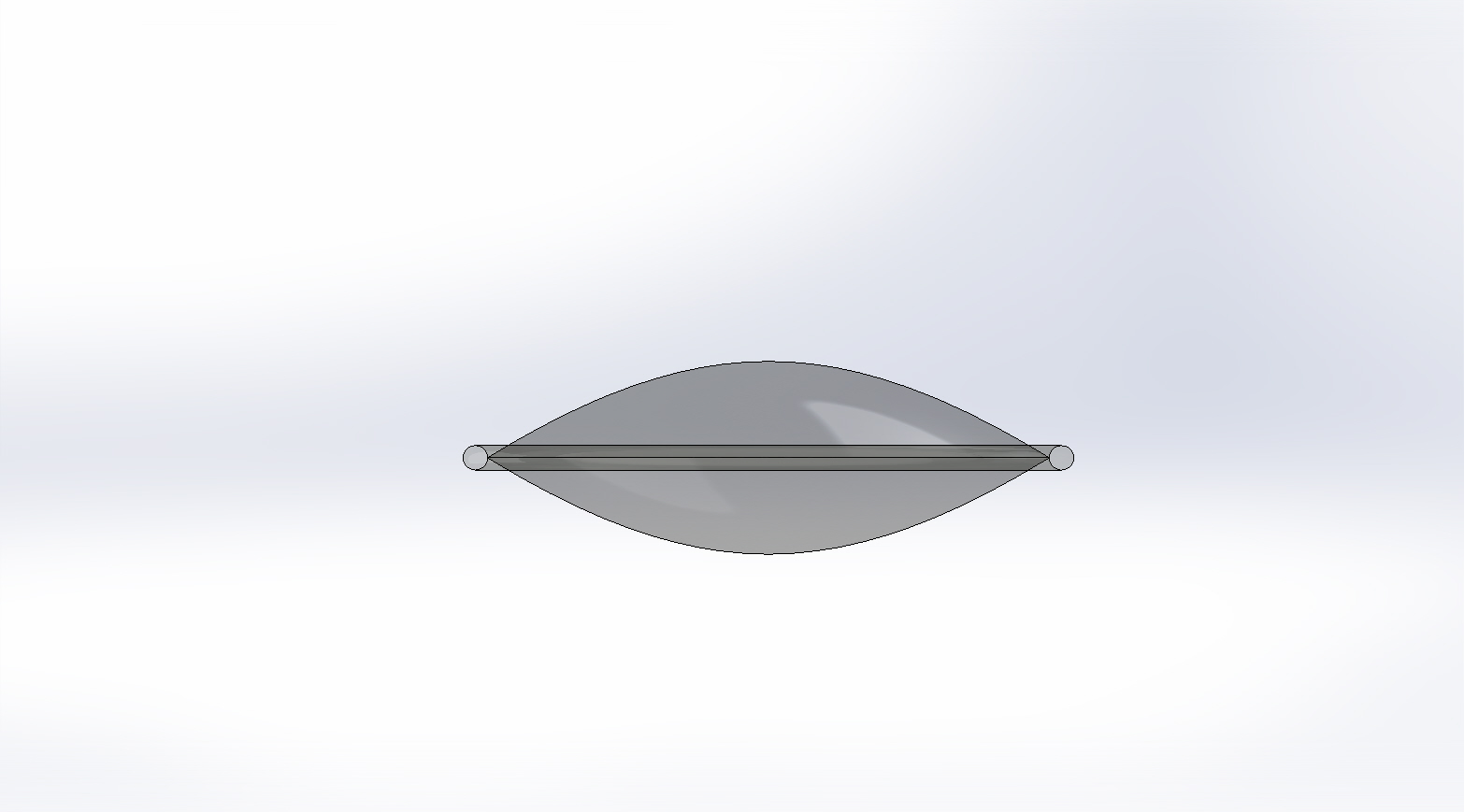
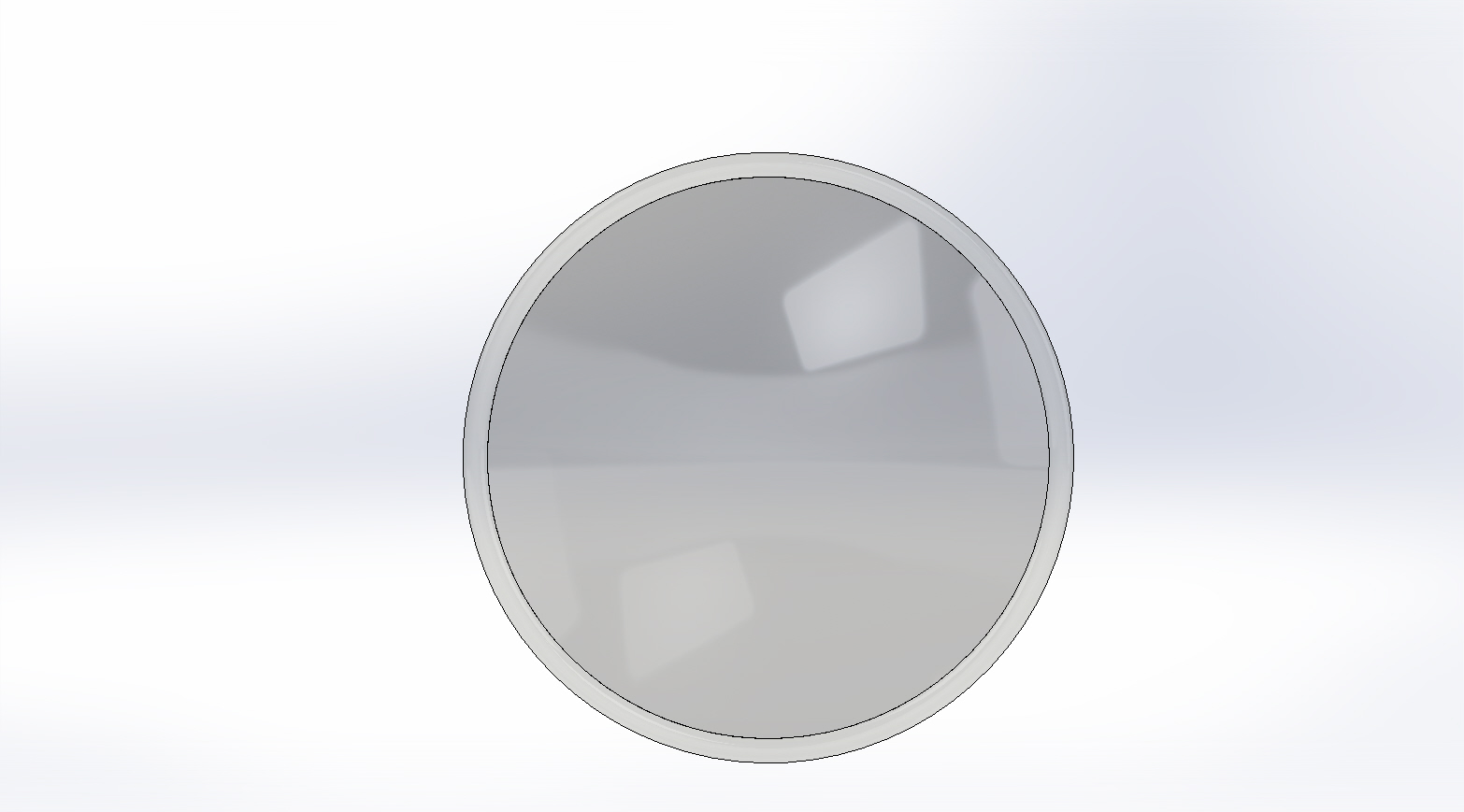
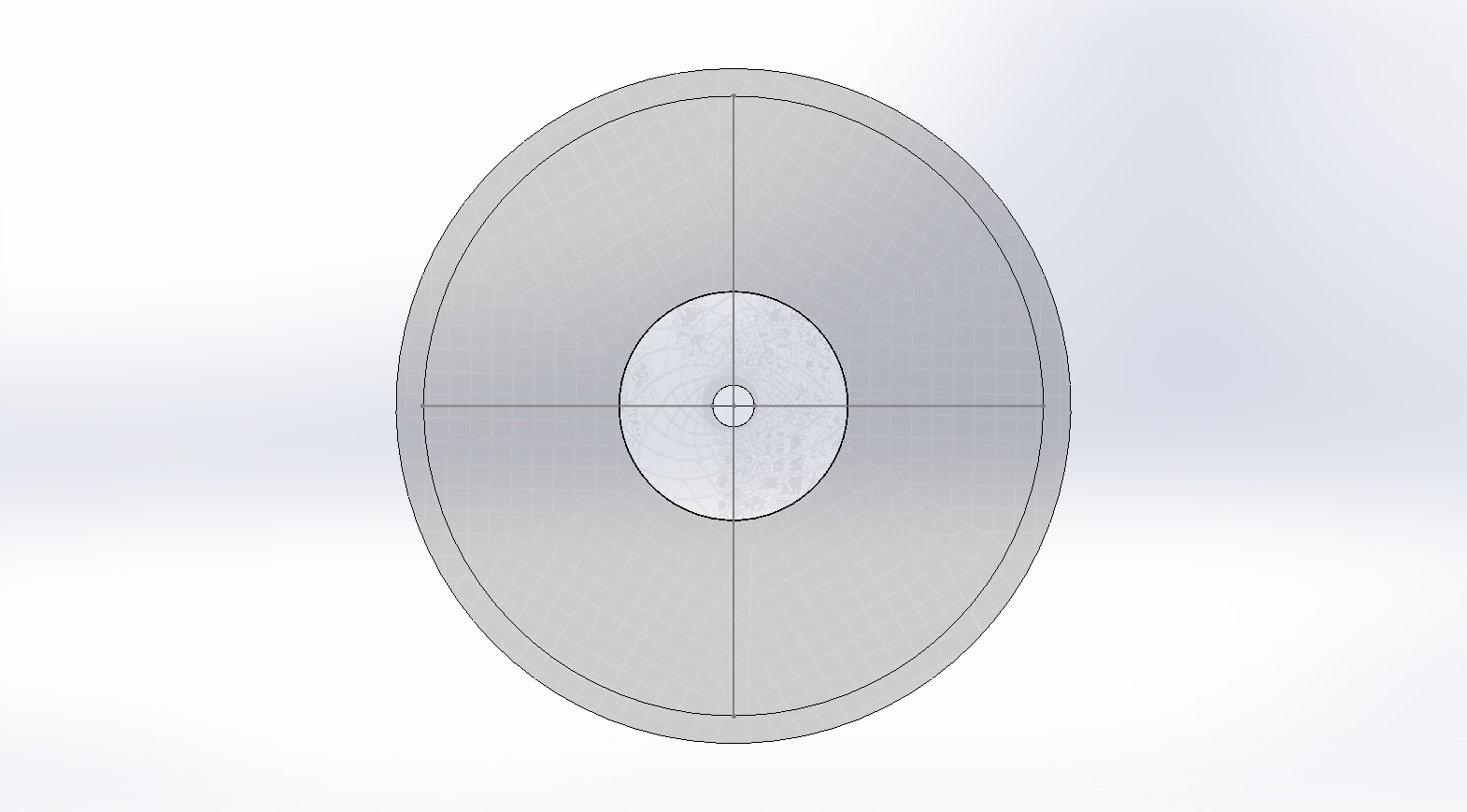
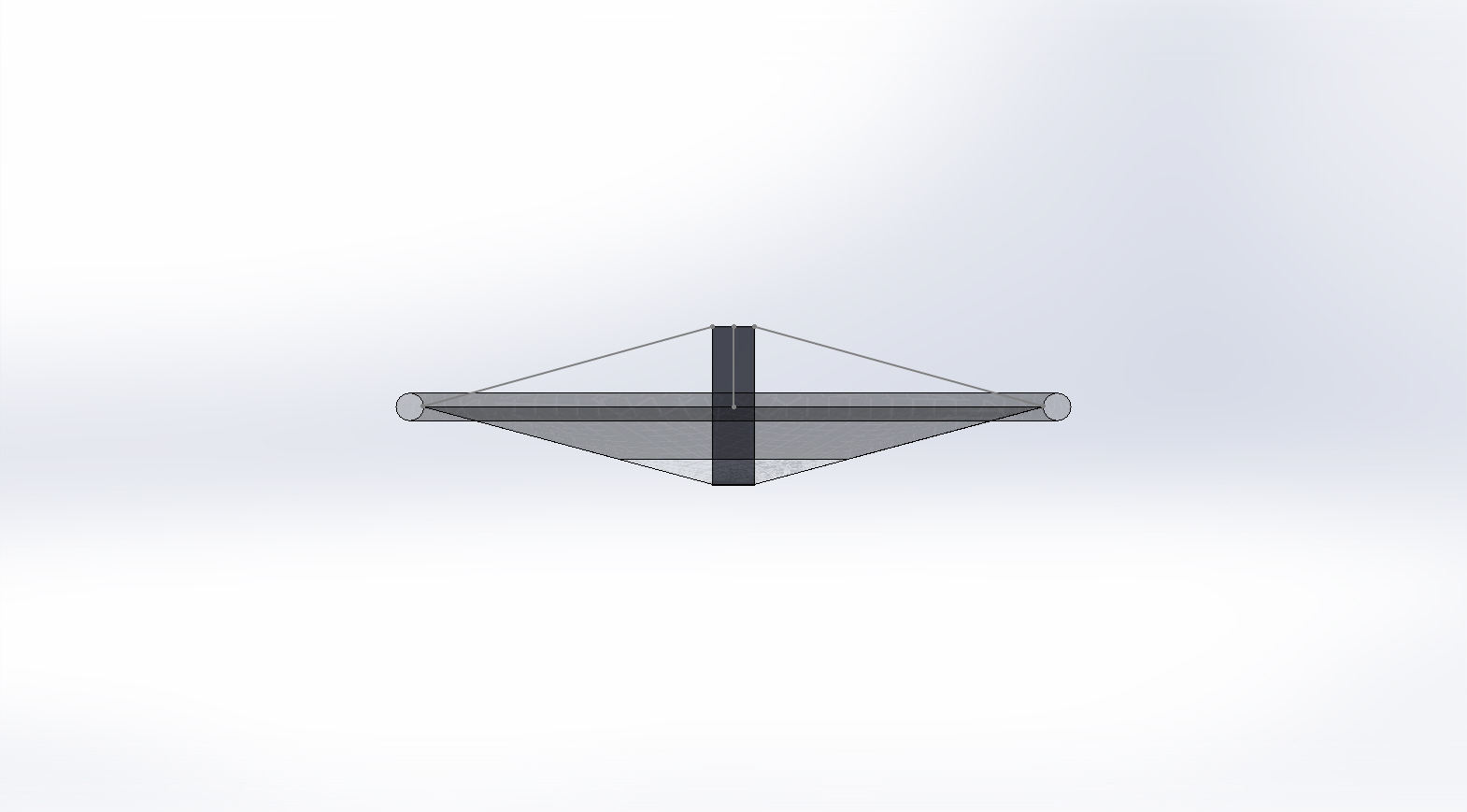
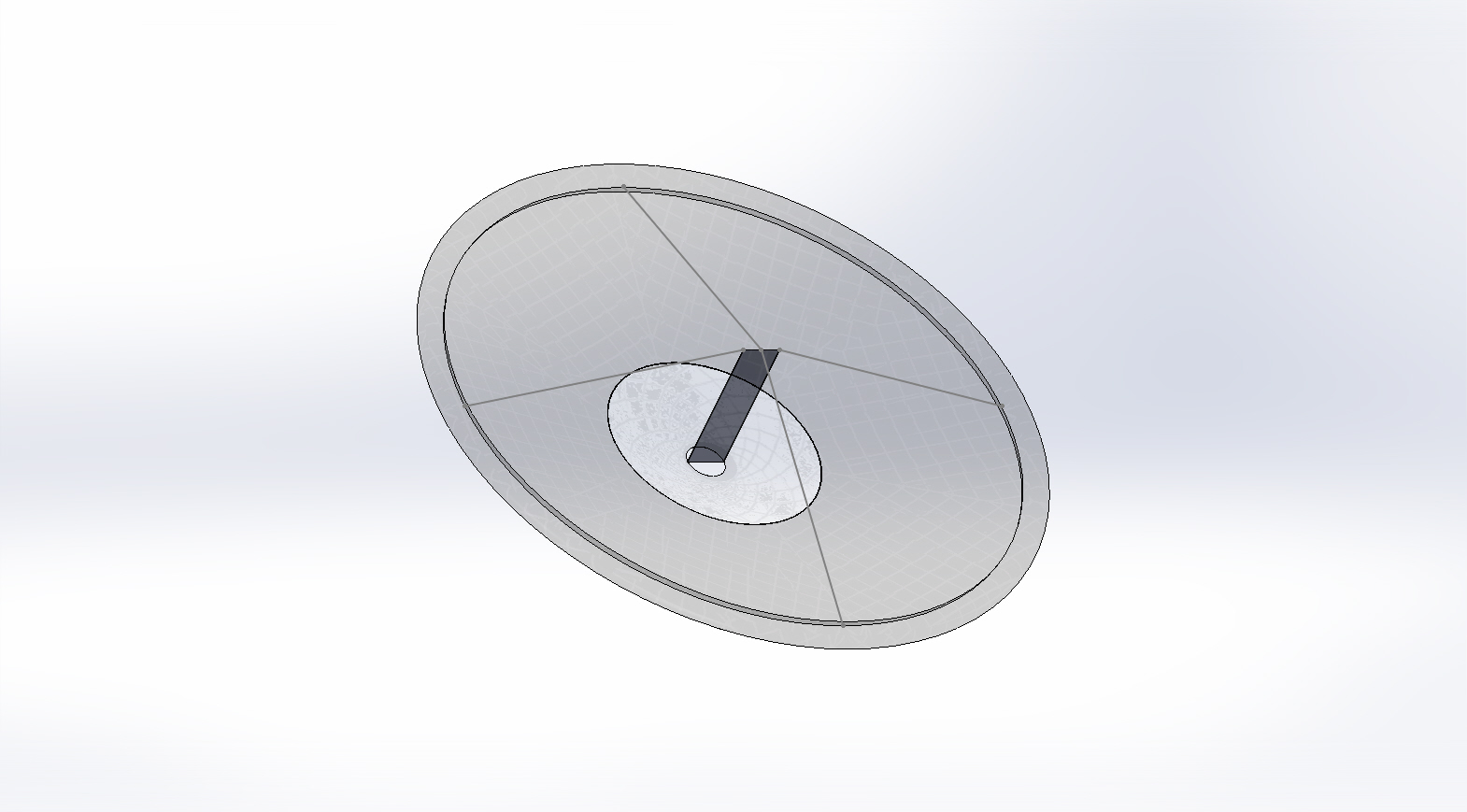
| Approach | Sail surfaces | Consequence for the spacecraft |
|---|---|---|
| Inflated | Two | A small mass of noble gas supports the form; the second surface adds substantial mass. |
| Tensegrity-supported | One | Tension and compression members support a single sail surface. |
| Lasergyro | One | Rotation tensions the sail. The lightest candidate investigated; stability remained to be assessed. |
Surface count describes the sail architecture; it is separate from the three optical layers in the Bragg stack.
The sail’s usefulness would change once it had delivered the momentum for the crossing. A large surface traveling through interstellar matter would encounter particles and impose drag, lengthening the trip. Salazar therefore wanted the sail to survive propulsion, but ideally not the full journey. The very area that enabled departure could become a liability afterward.
He considered whether radiation-induced material defects might gradually weaken the delicate sail; laser exposure might also contribute to damage. That possibility was not developed into a controlled breakup mechanism or a predictable lifetime. It nevertheless changed the design question: the wafer bus needed to reach another star in working condition, while the sail needed to complete a much shorter job.
Interstellar space contains matter, however thinly spread. For a spacecraft moving at a substantial fraction of the speed of light, ordinary particles in that medium arrive as energetic bombardment. Their energy in the spacecraft’s frame comes from its own rapid motion. Shortening the journey makes the encounter with those particles more severe. (Research context: relativistic spacecraft and the interstellar medium)
The wafer bus—the small platform carrying the electronics—was intended to travel edge-on, presenting an edge both to the propulsion beam and to the oncoming medium. At the trailing edge, a highly reflective Bragg stack of silica and silica aerogel would protect it from the laser. Transmission that was acceptable through the sail would be dangerous here: it would expose the electronics to the beam. The same material pair served different requirements in different parts of the spacecraft.
The leading edge needed protection from interstellar particles. Salazar calculated shield thickness as a function of the wafer’s tolerance to exposure over the mission. That tolerance depended in part on computation: radiation can flip bits, and redundancy affects how much exposure the electronics can withstand. The final tolerance had not been established, so shielding remained a relationship to be evaluated with the electronic design, its mass and the time available for the journey.
The bombardment also carried energy. Salazar proposed making the leading-edge shield a radiovoltaic cell, converting some of the energy deposited by incoming particles into electricity. Diamond and boron nitride were candidate materials. The material placed to protect the explorer could also help power it through the long crossing.
He calculated cases for this combined shield and converter, while the collecting area remained dependent on the dimensions of the gram-scale wafer bus. The electronics were to be designed around the power available, supplemented by a charged onboard ultracapacitor for electrical energy storage. Protection, power and computation would have to be developed together. How much the probe could do at its destination depended on how effectively those responsibilities could share its small allocation of material.
The work established a set of architectural possibilities and calculated relationships, rather than a final optimal spacecraft. It was largely a Technology Readiness Level 2 study, developing the concept and examining its feasibility. Salazar’s contribution combined the broad design comparison with the three-layer optical optimization, thermal and purity requirements, and parametric shielding and power calculations. Those relationships gave subsequent work concrete alternatives to investigate.
There were physical objects, too. Inflated sail prototypes were made from films less than a micrometre thick, using materials different from the proposed silica and aerogel stack. Salazar brought an inflatable sail prototype he had made to the UCSB team’s booth at Yuri’s Night Los Angeles in 2018. Visitors could see a tangible part of an effort to cross the space between stars. (Yuri’s Night Los Angeles, April 7, 2018)
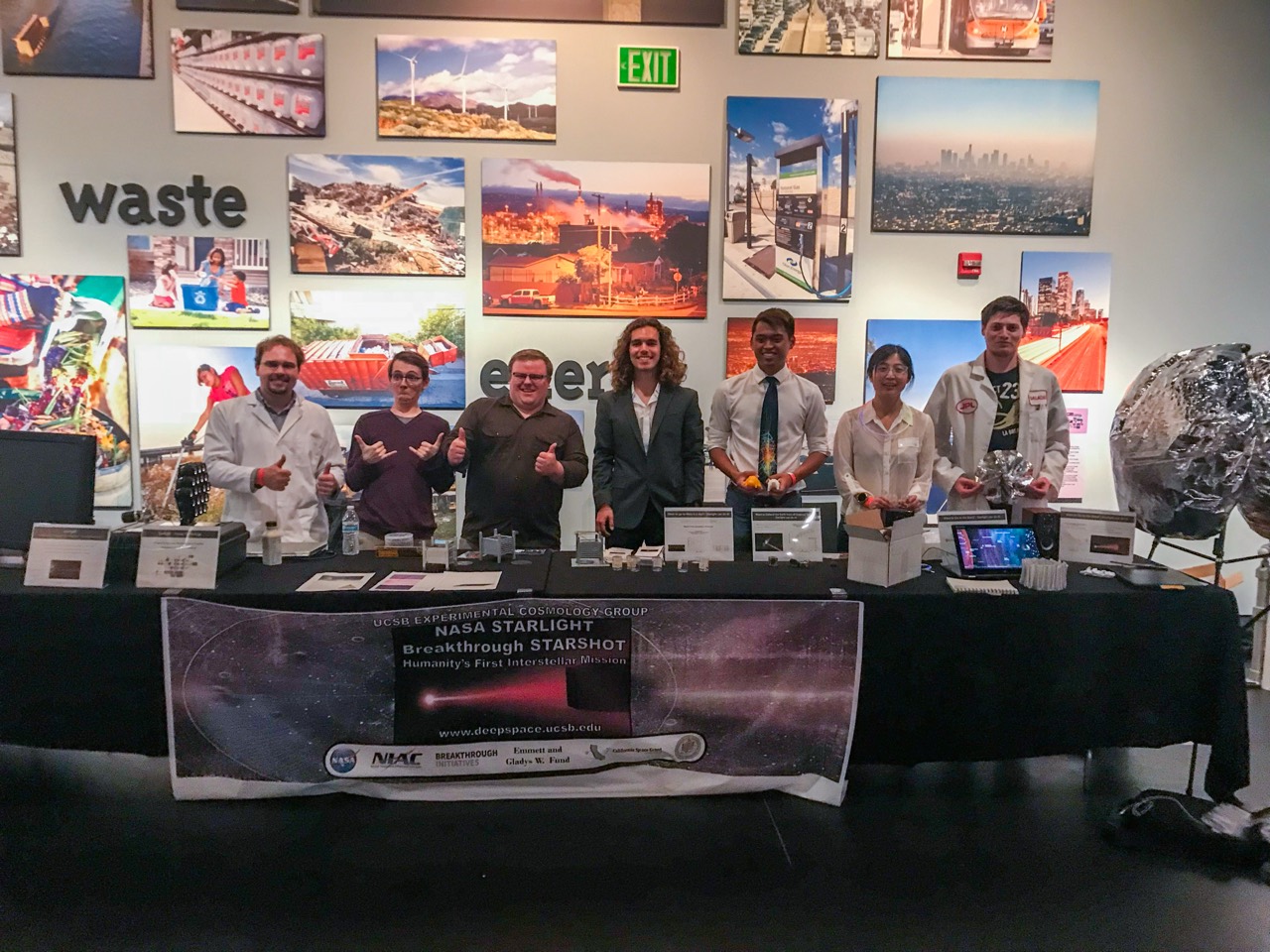
The UCSB team’s booth at Yuri’s Night Los Angeles on April 7, 2018. The display included an inflatable sail prototype made by Robert Salazar. Photograph supplied by Salazar.
The measure of these choices was the encounter they might make possible. A few surviving probes could give us our first close observations of another stellar system—and begin to show what a world beside Proxima is actually like.
Philip Lubin
Principal investigator, UCSB Starlight effort.
Robert Salazar
Spacecraft architecture and design space study, including sail and support concepts, wafer protection, and the proposed radiovoltaic shield.
Nic Rupert
Wafer-scale spacecraft development, including onboard electronics and spacecraft systems.
The architecture work began around 2017. Salazar oversaw spacecraft architecture and the design space study; Rupert oversaw development of the wafer-scale spacecraft bus.
Inside the Plan to Send Tiny Probes to Explore Far-away Stars
TIME · April 13, 2016
Philip Lubin describes the directed-energy approach to sending small robotic probes toward other stars.